http://hotair.com/archives/2012/10/16/wrap-up-the-second-debate/
( if the rights calls it a push , you give the edge to Obama as I previously noted.... )
http://www.businessinsider.com/obama-won-the-debate-2012-10
( Round two goes to Obama.... )
HEMPSTEAD, N.Y. — A new President Barack Obama showed up here Tuesday night, putting up a dominant debate performance that was diametrically opposite from his showing in Denver just two weeks ago.
http://www.therightscoop.com/fox-report-hillary-clinton-takes-full-responsibility-for-benghazi-attacks-sorta/
( No one has been fired or forced to resign - let alone Hillary ! )
http://hotair.com/archives/2012/10/15/hillary-i-take-responsibility-for-benghazi/
Hillary Clinton: "I Take Responsibility" For Benghazi
But of course she blames it on lower-level advisers.
She says "I am responsible" for the security of State's 60,000 workers, but then says she's not responsible at all:
"The decision about security aspects are made by security professionals."
Source: Wendell Goler on FoxNews, about 40 minutes ago. The quote was printed on screen.
I'm responsible, but then again, I'm not; the buck stops with me, but not really, it was this low-level political appointee scapegoat who's going to claim he "shielded" me from these demands for additional security on his own authority.
But don't blame the President. See, I've taken responsibility.
I was responsible for the low-level scapegoat whose fault this really is.
Okay, Ms. Clinton: What are the names of these "security professionals" you say made this decision? Forgive my suspicions, but I'd like to ask them for their side of the story.
I'd also like documentary evidence for all of these claims.
Bonus: In April, the consulate was attacked.
The State Department suspected their very own guards carried out the attack.
and.......
http://still4hill.com/2012/10/15/hillary-clinton-the-buck-stops-with-me/
http://dailycaller.com/2012/10/12/the-clinton-obama-rift/
( Adds an interesting subtext to the looming Debate... )
http://www.powerlineblog.com/archives/2012/10/what-happened-in-benghazi.php
 The State Department has released a transcript of a briefing that two high-ranking department officials gave to a number of reporters via conference call on October 9 (Tuesday). I am not certain about this, but I believe the transcript was only made public today. You should read it in its entirety; it is the most detailed description I have seen of the events in Benghazi on September 11.
Foreign Policy Hot Buttons -
1) Libya - expect Romney to hit hard on the shifting explanations for the attack , who knew what about the weak security ( not just mistakes before but the failure to secure the embassy AFTER the attack - which really has not been a focus but is simply another glaring failure ) and when did they know it , where does the buck stop for the failures in Libya - does Obama directly throw Hillary under the bus to try to save his hide and Joe's hide ?
http://www.politico.com/politico44/2012/10/report-white-house-considering-retaliatory-libya-strike-138511.html
http://news.antiwar.com/2012/10/12/british-weapons-missing-after-benghazi-consulate-attack/
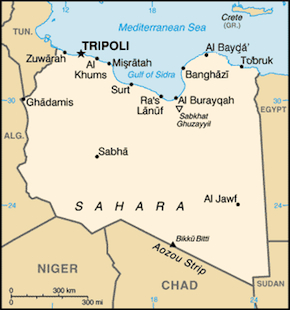 The site, which wasn’t particularly well defended to begin with, was apparently used by the British government to store its weapons, including rocket-propelled grenades, after Britain had decided to abandon the city.
http://www.guardian.co.uk/world/2012/oct/12/benghazi-attack-republicans-white-house
( Following Biden's comment at Thursday debate , expect Libya debacle involving the death of Ambassador Stevens to play a prominent role... )
( if the rights calls it a push , you give the edge to Obama as I previously noted.... )
Wrap up: The second debate; Update: Obama wins CBS insta-poll narrowly, but Romney wins big on economy; Update: Actually, Romney had a point, says Crowley
POSTED AT 11:19 PM ON OCTOBER 16, 2012 BY ALLAHPUNDIT
The consensus among the righties that I follow on Twitter is that it was a push, with Romney acing his answer on the economy and underperforming when he finally took on The One on Libya. Better that than vice versa, though: As Ben Domenech said, only one of those is an issue that people will vote on.
There were several key exchanges — the staredown on energy, Romney politely distancing himself from Bush — but I’m giving you the economy and Libya answers below, via theExaminer and Daily Caller, respectively. Romney seemed unprepared for the pushback from Obama and his pal Candy on what he said about “acts of terror” in the Rose Garden on September 12; The One now wants us to believe that he was forthright about calling it a terrorist attack all along, when in fact he was so coy and evasive that Jay Carney had to clarify his view for the press more than two weeks later. Romney didn’t chase him on that or on all the other nonsense in the aftermath — blaming a “spontaneous protest” when even the earliest intel suggested a terror attack, running ads in Pakistan groveling over a private citizen’s insult to Mohammed, the snowballing revelations about just how indifferent State was to Chris Stevens’s security, etc. O even got to play the part of the indignant C-in-C, declaring how offended he was that anyone would accuse him of playing politics with this issue when, in fact, he’s been playing politics with it since day one. And of course, just as I expected, he finally took meaningless symbolic responsibility for the Benghazi security failure now that Hillary had covered his ass by taking responsibility herself last night.
The good news? Mitt gets another crack at the Libya attack in the next debate, which will focus exclusively on foreign policy. He’ll be very well prepared, rest assured. And since most of the media’s coverage tomorrow will focus on the Libya exchange tonight, that issue will continue to get plenty of coverage for the rest of the week. I can live with that. Exit quotation from Ben Smith: “Romney did, again, come away looking like a guy who could be president, which is probably the most important thing.” Yep.
http://www.businessinsider.com/obama-won-the-debate-2012-10
( Round two goes to Obama.... )
HEMPSTEAD, N.Y. — A new President Barack Obama showed up here Tuesday night, putting up a dominant debate performance that was diametrically opposite from his showing in Denver just two weeks ago.
No poll numbers are in yet, so it is still difficult to say who won the debate definitively.
But Obama did what he had to do Tuesday night — deliver a decisive performance that showed he still wants to win this thing. He hit the high notes of his campaign's message on the middle class, defended his administration from Republican attacks on Libya, and took a few shots at Romney over his tax plan, flip-flops, and even his 47-percent comments.
Appearing in the spin room before the debate had even ended, Obama's campaign manager Jim Messina was ecstatic:
"It was a great night," Messina told reporters, grinning. "It was a big night, it was a dominant performance for the president."
"Romney seemed angry, sweaty, he was rattled — he had a real problem tonight defending his record," he added. "The American people saw a candidate tonight who was exposed for what he is, which is a man without a plan who is just trying to get by on attacking the president."
"We feel great about tonight!"
http://www.therightscoop.com/fox-report-hillary-clinton-takes-full-responsibility-for-benghazi-attacks-sorta/
( No one has been fired or forced to resign - let alone Hillary ! )
 The Right Scoop
***UPDATED***
On the eve of the big debate for Obama, Hillary Clinton tries to take the heat off of Obama by taking full responsibility for the security failure in Benghazi on 9/11 which led to the attacks on our consulate where our Ambassador was assassinated along with three other Americans. However, she conveniently doesn’t have any details on why the security was decreased in Libya, only to say the decisions were made by security personnel and she’s got an investigation underway to determine the facts.
So in a nutshell this was a purely political move to give Obama breathing room tomorrow night. That’s it.
Watch the report:
UPDATE: I meant to note from the video that Hillary Clinton was asked to explain Ambassador Susan Rice’s statements on the 5 major Sunday news shows, blaming the attack on a protest that got out of control because of the Muhammad video. Her response was that it was the “fog of war”. Seriously. Watch the video for more.
Also, Politico has this writeup on it:
Secretary of State Hillary Clinton tells CNN’s “Out Front,” “I take responsibility” for the Mideast violence on Sept. 11, remarks coming on the heels of the VP debate in which Joe Biden suggested the White House hasn’t known of requests for more security in Benghazi.In a clear nod to not only the election but the two debates coming in the next week, she added, “I want to avoid some kind of political gotcha.”Wow. She left nothing to the imagination regarding the timing of her statement. This is clearly a political move by her own admission.Ugh. This administration doesn’t do anything based on principle. Everything is politics.
http://hotair.com/archives/2012/10/15/hillary-i-take-responsibility-for-benghazi/
Hillary: I take responsibility for Benghazi
POSTED AT 8:48 PM ON OCTOBER 15, 2012 BY ALLAHPUNDIT
Fearless prediction: With Hillary having now formally accepted blame, President Above The Fray will magnanimously volunteer at tomorrow night’s debate that, no no, it is with him that the buck ultimately stops. The White House has been holding off on doing that because they’re desperate to frame this as an internal problem at State. Now that Clinton’s gone and done that, Obama can pose as a stand-up guy and loyal boss by symbolically accepting responsibility on behalf of the people who are really at fault.
Secretary of State Hillary Clinton said the bucks stops with her when it comes to who is blame for a deadly assault on the U.S. diplomatic mission in Benghazi.“I take responsibility” for what happened on September 11, Clinton said in an interview with CNN’s Elise Labott soon after arriving in Lima, Peru for a visit. The interview, one of a series given to U.S. television networks Monday night, were the first she has given about the attack on the U.S. consulate in Benghazi.Clinton insisted President Barack Obama and Vice President Joe Biden are not involved in security decisions, Clinton said.“I want to avoid some kind of political gotcha,” she added, noting that it is close to the election.
Ace has another quote from her that essentially puts the whole thing off on her underlings, but there’s no link and I don’t see it in the CNN story. No matter, though: She’s not claiming actual responsibility in the excerpt above, just symbolic responsibility as the head of the Department that’s at fault. Given how the public generally respects showy professions of blame, it’s really the easiest thing in the world to make a “buck stops here” statement. The One himself would have done it weeks ago, I’m sure, if not for the fact that he’s caught in an election death struggle and knows the GOP would have hammered him with it. (As I explained above, it’s safer politically for him to do it now that Hillary’s chimed in.) The only way to make a “buck stops here” admission truly meaningful is to put some meat on the bone by identifying and correcting all the things that you’ve done wrong. Has Hillary done any of that yet? What protocols at State are going to change from all of this? Are we finished, at least, with pitiful public groveling to Islamists about how awful and terrible and reprehensible that Mohammed movie that hurt their feelings was?
Here’s the real question: Did Obama put Hillary up to this or did she do it on her own initiative to put O on the spot? As I’ve explained, I think this actually helps him by letting him accept symbolic responsibility while continuing to shunt actual responsibility onto State. But maybe I’m wrong. A friend e-mailed me after I wrote this post on Friday scolding me for thinking that Obama might throw Hillary under the bus rather than vice versa. After all, she’d have an easier time running in 2016 against President Romney than she would trying to succeed a two-term Democratic president. (Although, in that case, why did Bill Clinton give a wildly successful speech for O at the convention?) And as I said Friday, thereis political peril for O in having Hillary go first on this. Potentially, he’ll look weak and diffident tomorrow night by following her lead, not loyal and magnanimous — and maybe Hillary knew that when she stepped up. Expect Romney to hammer that point, especially given how much he enjoys playing the Clintons off of Obama. What kind of “leader” says “the buck stops here” only after it’s already stopped somewhere else?
Here’s the vid, via CNN. This will, assuredly, be used against Hillary in 2016 if she runs, but I think she figures that between her high favorables and the fact that the public likes when executives “take charge” by accepting blame or whatever, she’ll be forgiven by voters. Quite possible.
Update: Ace e-mails to say that the Hillary quote in his post came from Wendell Goler on Fox News, who also interviewed Clinton today. They put it up on the screen sometime early this evening.
and Hil takes responsibility but not the blame ! Ya gotta love how the Clintons roll.....
Hillary Clinton: "I Take Responsibility" For Benghazi
(But It Was An Underlng's Fault)
But of course she blames it on lower-level advisers.She says "I am responsible" for the security of State's 60,000 workers, but then says she's not responsible at all:
"The decision about security aspects are made by security professionals."
Source: Wendell Goler on FoxNews, about 40 minutes ago. The quote was printed on screen.
I'm responsible, but then again, I'm not; the buck stops with me, but not really, it was this low-level political appointee scapegoat who's going to claim he "shielded" me from these demands for additional security on his own authority.
But don't blame the President. See, I've taken responsibility.
I was responsible for the low-level scapegoat whose fault this really is.
Okay, Ms. Clinton: What are the names of these "security professionals" you say made this decision? Forgive my suspicions, but I'd like to ask them for their side of the story.
I'd also like documentary evidence for all of these claims.
Bonus: In April, the consulate was attacked.
The State Department suspected their very own guards carried out the attack.
State Department officials suspected that two Libyan guards hired by its own security contractor were behind an April incident in which a homemade bomb was hurled over the wall of the special mission in Benghazi, according to official emails obtained by Reuters…The April attack illustrated concerns among some U.S. officials in Libya that hiring local residents for embassy guard duties could in itself raise security issues.
The emails identified one of the suspects in that incident as a former employee of Blue Mountain Group who had been fired four days earlier for vandalism, and said the other was still working for the company. Both were unarmed guards who performed routine security tasks, such as screening visitors.
An assessment of the guards stated that they were of "extremely low caliber."
and.......
http://still4hill.com/2012/10/15/hillary-clinton-the-buck-stops-with-me/
Hillary Clinton: “The buck stops with me.”
October 15, 2012 by still4hill
http://dailycaller.com/2012/10/12/the-clinton-obama-rift/
( Adds an interesting subtext to the looming Debate... )
Klein: Clinton-Obama rift intensifies after Libya, Obama’s debate performance
After Bill Clinton delivered his electrifying speech at the Democratic National Convention, many political observers concluded that the Clintons and Obamas had called a truce to their long-running feud. Under their armistice, Clinton agreed to make speeches and appear in TV commercials for Obama, acting like a booster rocket for the Democratic ticket in the remaining weeks of the campaign.
for Obama, acting like a booster rocket for the Democratic ticket in the remaining weeks of the campaign.
It was a pretty picture, but as I have learned from several sources inside the Clinton camp, it turned out to be a case of wishful thinking.
In fact, since the convention, Clinton and Obama have had a serious falling-out over two issues: the president’s preparation and lamentable performance in his debate with Mitt Romney, and the question of who should be assigned blame — Obama or Secretary of State Hillary Clinton — for the intelligence and security screw-up in Benghazi, Libya.
This new rift, which the Clintons and Obamas have managed to keep secret from the media, has poisoned their relations to such an extent that it could conceivably have an impact on the outcome of the presidential election.
, has poisoned their relations to such an extent that it could conceivably have an impact on the outcome of the presidential election.
* * *
The latest quarrel began when Clinton heard that Obama was behaving so cocky about his first debate against Mitt Romney that he wasn’t taking his debate prep seriously. Out of concern, Clinton had an aide call the White House and say that the former president would be more than happy to give the current president some pointers and advice on how to get the best of Romney.
Clinton waited several days for a response, but none was forthcoming. According to my sources, the former president was dumbfounded that Obama had ignored his offer, and his hurt feelings quickly boiled over into anger.
“Bill thought that he and Obama were on friendly terms after the convention,” one source told me. “He couldn’t believe that the White House didn’t even extend him the courtesy of a return phone call. He concluded that Obama’s arrogance knows no bounds.”
The fact is, these two proud and egocentric men have a long and acrimonious history. Four years ago, after Obama’s South Carolina primary victory over Hillary Clinton, Bill called Obama’s campaign “a fairy tale.” Not to be outdone, Obama referred to the Clinton presidency as a “psychodrama.”
Later, after Obama won the presidency, he and Clinton held a joint press conference at the White House. Clinton promptly took over the podium, edging out Obama and prompting the new president to leave the stage altogether.
Given this history, it was not surprising that Obama was reluctant to give Clinton a starring role at the Democratic Convention. It was only after David Axelrod and other Obama campaign advisers argued that a Clinton speech was essential to a successful convention bounce that the president agreed to let Clinton deliver the prime-time nominating speech. Just as Obama feared, Clinton stole the show and made Obama look smaller by comparison.
In the past, Obama has grumbled that he doesn’t enjoy being “lectured to” by Clinton. Perhaps that’s why Obama has never once invited Bill and Hillary to the White House for an informal dinner.
Despite their mutual lack of trust, Clinton and Obama have managed to keep their personal feelings under control — up to now. But in the wake of the fatal attack on the U.S. consulate in Benghazi, Clinton is concerned that the White House and Obama’s campaign headquarters in Chicago are moving to dump political and legal blame for the Libya mess on the State Department and, by definition, on Hillary Clinton herself.
My sources tell me that Clinton is working on a strategy that will allow Hillary to avoid having Benghazi become a stain on her political fortunes should she decide to run for president in 2016.
Bill Clinton has even gone so far as to seek legal advice about Hillary’s liability in terms of cables and memos that might be subpoenaed by the House Oversight and Government Reform Committee, which this week launched an investigation into the deaths of Ambassador Chris Stevens and three other Americans. The committee will also examine the apparent Obama administration cover-up that followed the Benghazi attack.
Finally, I’m told that Bill is playing with various doomsday scenarios, up to and including the idea that Hillary should consider resigning over the issue if the Obama team tries to use her as a scapegoat. That seems unlikely to happen. But if relations between Obama’s White House and Hillary’s State Department rupture publicly over the growing Benghazi scandal, that could damage the Democratic ticket and dim Obama’s chances for re-election.
and the State Department fires back after Biden tries to dump on them........
http://www.powerlineblog.com/archives/2012/10/what-happened-in-benghazi.php
WHAT HAPPENED IN BENGHAZI
 The State Department has released a transcript of a briefing that two high-ranking department officials gave to a number of reporters via conference call on October 9 (Tuesday). I am not certain about this, but I believe the transcript was only made public today. You should read it in its entirety; it is the most detailed description I have seen of the events in Benghazi on September 11.
While this is by no means clear, it appears that the State Department may have released the transcript as part of the escalating conflict between Barack Obama and Joe Biden and the Secretary of State, Hillary Clinton. In their desperation to avoid responsibility for the Benghazi debacle, Obama and Biden have pointed fingers in two directions: at the intelligence community for reporting incorrectly that the incident was a protest over a YouTube video clip, and at the State Department for not providing adequate security for the Ambassador.
Here are some excerpts from the narrative:
A few minutes later – we’re talking about 9 o’clock at night – the Ambassador retires to his room, the others are still at Building C, and the one agent in the [Tactical Operations Center]. At 9:40 p.m., the agent in the TOC and the agents in Building C hear loud noises coming from the front gate. They also hear gunfire and an explosion. The agent in the TOC looks at his cameras – these are cameras that have pictures of the perimeter – and the camera on the main gate reveals a large number of people – a large number of men, armed men, flowing into the compound. One special agent immediately goes to get the Ambassador in his bedroom and gets Sean, and the three of them enter the safe haven inside the building. …They turn around immediately and head back – or the two of them, from Building B, turn around immediately with their kit and head back to Villa C, where the Ambassador and his colleagues are. They encounter a large group of armed men between them and Building C. I should say that the agent in Building C with the Ambassador has radioed that they are all in the safe haven and are fine. The agents that encounter the armed group make a tactical decision to turn around and go back to their Building B and barricade themselves in there. So we have people in three locations right now.And I neglected to mention – I should have mentioned from the top that the attackers, when they came through the gate, immediately torched the barracks. It is aflame, the barracks that was occupied by the 17th February Brigade armed host country security team. I should also have mentioned that at the very first moment when the agent in the TOC seized the people flowing through the gate, he immediately hits an alarm, and so there is a loud alarm. He gets on the public address system as well, yelling, “Attack, attack.” Having said that, the agents – the other agents had heard the noise and were already reacting.
Okay. So we have agents in Building C – or an agent in Building C with the Ambassador and Sean, we have two agents in Building B, and we have two agents in the TOC. All – Building C is – attackers penetrate in Building C. They walk around inside the building into a living area, not the safe haven area. The building is dark. They look through the grill, they see nothing. They try the grill, the locks on the grill; they can’t get through. The agent is, in fact, watching them from the darkness. He has his long gun trained on them and he is ready to shoot if they come any further. They do not go any further.
They have jerry cans. They have jerry cans full of diesel fuel that they’ve picked up at the entrance when they torched the barracks. They have sprinkled the diesel fuel around. They light the furniture in the living room – this big, puffy, Middle Eastern furniture. They light it all on fire, and they have also lit part of the exterior of the building on fire. At the same time, there are other attackers that have penetrated Building B. The two agents in Building B are barricaded in an inner room there. The attackers circulate in Building B but do not get to the agents and eventually leave.
A third group of attackers tried to break into the TOC. They pound away at the door, they throw themselves at the door, they kick the door, they really treat it pretty rough; they are unable to get in, and they withdraw. Back in Building C, where the Ambassador is, the building is rapidly filling with smoke. The attackers have exited. The smoke is extremely thick. It’s diesel smoke, and also, obviously, smoke from – fumes from the furniture that’s burning. And the building inside is getting more and more black. The Ambassador and the two others make a decision that it’s getting – it’s starting to get tough to breathe in there, and so they move to another part of the safe haven, a bathroom that has a window. They open the window. The window is, of course, grilled. They open the window trying to get some air in. That doesn’t help. The building is still very thick in smoke. …
Okay. We’ve got the agent. He’s opening the – he is suffering severely from smoke inhalation at this point. He can barely breathe. He can barely see. He’s got the grill open and he flops out of the window onto a little patio that’s been enclosed by sandbags. He determines that he’s under fire, but he also looks back and sees he doesn’t have his two companions. He goes back in to get them. He can’t find them. He goes in and out several times before smoke overcomes him completely, and he has to stagger up a small ladder to the roof of the building and collapse. He collapses. …
The agent in the TOC, who is in full gear, opens the door, throws a smoke grenade, which lands between the two buildings, to obscure what he is doing, and he moves to Building B, enters Building B. He un-barricades the two agents that are in there, and the three of them emerge and head for Building C. There are, however, plenty of bad guys and plenty of firing still on the compound, and they decide that the safest way for them to move is to go into an armored vehicle, which is parked right there. They get into the armored vehicle and they drive to Building C.
They drive to the part of the building where the agent had emerged. He’s on the roof. They make contact with the agent. Two of them set up as best a perimeter as they can, and the third one, third agent, goes into the building. This goes on for many minutes. Goes into the building, into the choking smoke. When that agent can’t proceed, another agent goes in, and so on. And they take turns going into the building on their hands and knees, feeling their way through the building to try to find their two colleagues. They find Sean. They pull him out of the building. He is deceased. They are unable to find the Ambassador. …
At this point, the quick reaction security team and the Libyans, especially the Libyan forces, are saying, “We cannot stay here. It’s time to leave. We’ve got to leave. We can’t hold the perimeter.” So at that point, they make the decision to evacuate the compound and to head for the annex. The annex is about two kilometers away. My agents pile into an armored vehicle with the body of Sean, and they exit the main gate. …
[T]hey take fire almost as soon as they emerge from the compound. They go a couple of – they go in one direction toward the annex. They don’t like what they’re seeing ahead of them. There are crowds. There are groups of men. They turn around and go the other direction. They don’t like what they’re seeing in that direction either. They make another u-turn. They’re going at a steady pace. There is traffic in the roads around there. This is in Benghazi, after all. Now, they’re going at a steady pace and they’re trying not to attract too much attention, so they’re going maybe 15 miles an hour down the street.
They come up to a knot of men in an adjacent compound, and one of the men signals them to turn into that compound. They agents at that point smell a rat, and they step on it. They have taken some fire already. At this point, they take very heavy fire as they go by this group of men. They take direct fire from AK-47s from about two feet away. The men also throw hand grenades or gelignite bombs under – at the vehicle and under it. At this point, the armored vehicle is extremely heavily impacted, but it’s still holding. There are two flat tires, but they’re still rolling. …
As the night goes on, a team of reinforcements from Embassy Tripoli arrives by chartered aircraft at Benghazi airport and makes its way to the compound – to the annex, I should say. And I should have mentioned that the quick reaction – the quick reaction security team that was at the compound has also, in addition to my five agents, has also returned to the annex safely. The reinforcements from Tripoli are at the compound – at the annex. They take up their positions. And somewhere around 5:45 in the morning – sorry, somewhere around 4 o’clock in the morning – I have my timeline wrong – somewhere around 4 o’clock in the morning the annex takes mortar fire. It is precise and some of the mortar fire lands on the roof of the annex. It immediately killed two security personnel that are there, severely wounds one of the agents that’s come from the compound.
At that point, a decision is made at the annex that they are going to have to evacuate the whole enterprise. And the next hours are spent, one, securing the annex, and then two, moving in a significant and large convoy of vehicles everybody to the airport, where they are evacuated on two flights.
Barack Obama, meanwhile, was jetting off to Las Vegas for a fundraiser.
It was obvious to the reporters on the call that this narrative blows Obama’s evasions sky high:
First question is from the line of Anne Gearan with the Washington Post. Please go ahead.QUESTION: Hi. You said a moment ago that there was nothing unusual outside, on the street, or outside the gates of the main compound. When did the agents inside – what – excuse me, what did the agents inside think was happening when the first group of men gathered there and they first heard those explosions? Did they think it was a protest, or did they think it was something else?SENIOR STATE DEPARTMENT OFFICIAL TWO: The agent in the TOC heard the noise, heard the firing. Firing is not unusual in Benghazi at 9:40 at night, but he immediately reacted and looked at his cameras and saw people coming in, hit the alarm. And the rest is as I described it. Does that help?
This exchange is priceless:OPERATOR: The next question is from the line of Brad Klapper with AP. Please, go ahead.QUESTION: Hi, yes. You described several incidents you had with groups of men, armed men. What in all of these events that you’ve described led officials to believe for the first several days that this was prompted by protests against the video?SENIOR STATE DEPARTMENT OFFICIAL TWO: That is a question that you would have to ask others. That was not our conclusion. I’m not saying that we had a conclusion, but we outlined what happened. The Ambassador walked guests out around 8:30 or so, there was no one on the street at approximately 9:40, then there was the noise and then we saw on the cameras the – a large number of armed men assaulting the compound.So Hillary Clinton and the State Department unequivocally reject the account that Barack Obama and Joe Biden have given. It is hard to imagine what “intelligence” reports Obama could have received that blamed the YouTube video. He is lying, evidently.
Foreign Policy Hot Buttons -
1) Libya - expect Romney to hit hard on the shifting explanations for the attack , who knew what about the weak security ( not just mistakes before but the failure to secure the embassy AFTER the attack - which really has not been a focus but is simply another glaring failure ) and when did they know it , where does the buck stop for the failures in Libya - does Obama directly throw Hillary under the bus to try to save his hide and Joe's hide ?
http://www.politico.com/politico44/2012/10/report-white-house-considering-retaliatory-libya-strike-138511.html
Report: White House considering retaliatory Libya strike
The Associated Press reports:
Administration officials say the White House has put special operations strike forces on standby and moved drones into the skies above Africa, ready to hit militant targets fromLibya to Mali, if U.S. investigators can find the al-Qaida-linked group responsible for the death of the U.S. ambassador in Libya.
But the officials say the administration also is weighing whether the short-term payoff of being able to claim retribution against al-Qaida is worth the risk that such strikes would be ineffective and rile governments in the region.
Details were provided by three current and one former administration official, as well as an analyst who was approached by the White House for help. All four spoke only on condition of anonymity.
The White House would not confirm the reports.
"The investigation is on-going and we have nothing new right now. As [Pentagon spokesman] George Little has briefed recently, the DoD continues to monitor the situation closely and we are ready to respond with additional military measures when directed by the president," Robert Firman, a spokesman for the Department of Defense, told POLITICO.
and the heat continues to be put to the White House , State and CIA.....
http://www.politico.com/blogs/politico-live/2012/10/issa-state-dept-sitting-on-billionplus-for-embassy-138402.html?hp=r2_b3
Issa: State Dept. sitting on $2 billion-plus for embassy security
Rep. Darrell Issa (R-Calif.) says the State Department is sitting on $2.2 billion that should be spent on upgrading security at U.S. embassies and consulates worldwide, but the Obama administration will not spend the funds.
Issa made his comment during an appearance on CBS's "Face the Nation" to discuss the recent attack in Benghazi, Libya, that left U.S. Ambassador Chris Stevens and three other Americans dead. Issa, chairman of the House Oversight and Government Reform Committee, held a highly partisan hearing on the incident last week.
(PHOTOS: 10 slams on Obama and Benghazi)
Issa claims the State Department will not spend the already approved funds because they didn't want to the appearance of needing increased security.
(PHOTOS: 10 slams on Obama and Benghazi)
Issa claims the State Department will not spend the already approved funds because they didn't want to the appearance of needing increased security.
"The fact is, they [the State Department.] are making the decision not to put the security in because they don't want the presence of security," Issa said. "That is not how you do security."
With Republicans turning the Libya into a political issue, Democrats have countered that House GOP leaders actually sought to cut funding for embassy security, which Issa tried to refute.
"You can't always look to [new] money when there's money sitting there," Issa said. "We're going through a 'Mission Accomplished' moment. Eleven years after Sept. 11 [2001], Americans were attacked by terrorists who pre-planned to kill Americans. That happened, and we can't be in denial."Issa said that U.S. Ambassador to the United Nations Susan Rice may be called before his panel for testimony. Rice said shortly after the Benghazi attack that the incident was caused by an anti-Muslim video, not terrorists, a position that even President Barack Obama has now refuted.
and this article is really , really bad.....
http://www.telegraph.co.uk/news/worldnews/africaandindianocean/libya/9607958/British-firm-secured-Benghazi-consulate-contract-with-little-experience.html
British firm secured Benghazi consulate contract with little experience
A small British firm based in south Wales had secured a contract to provide security for American diplomatic facilities in Benghazi despite having only a few months experience in the country.

Sources have told the Daily Telegraph that just five unarmed locally hiredLibyans were placed on duty at the compound on eight-hour shifts under a deal that fell outside the State Department's global security contracting system.
Blue Mountain, the Camarthen firm that won a $387,000 (£241,000) one year contract from the US State Department to protect the compound in May, sent just one British employee, recruited from the celebrity bodyguard circuit, to oversee the work.
The compound was overrun by a mob of Islamic extremists on the morning of September 12 in an apparent planned attack that resulted in the death by asphyxiation of the ambassador, Chris Stevens.
Blue Mountain, which is run by a former member of the SAS, received paper work to operate in Libya last year following the collapse of Col Muammar Gaddafi's regime. It worked on short term contacts to guard an expatriate housing compound and a five-star hotel in Tripoli before landing the prestigious US deal.
Other firms in the security industry expressed surprise that Blue Mountain had won a large, high profile contract from the US government. One industry executive said the level of service Blue Mountain provided did not appear adequate to the risks presented by a lawless city.
http://news.antiwar.com/2012/10/12/british-weapons-missing-after-benghazi-consulate-attack/
British Weapons Missing After Benghazi Consulate Attack
Britain Left Weapons Cache at Since-Looted US Consulate
by Jason Ditz, October 12, 2012
There have already been plenty of reasons to question the US decision to leave their Bengazi consulate entirely unguarded for weeks after the September 11 attack. Apparently rocket launchers are now among them.
The site, which wasn’t particularly well defended to begin with, was apparently used by the British government to store its weapons, including rocket-propelled grenades, after Britain had decided to abandon the city.
Unsurprisingly the consulate, which was subject to considerable looting over the ensuing weeks, wasn’t such a great storage location, and Britain is now reporting that the weapons are “missing” with no clue where they might have gone.
Britain’s decision to flee the city because of soaring violence had already been a major question for the US State Department, in asking why they decided not only to say, but to refuse to increase security at the consulate.
http://www.guardian.co.uk/world/2012/oct/12/benghazi-attack-republicans-white-house
( Following Biden's comment at Thursday debate , expect Libya debacle involving the death of Ambassador Stevens to play a prominent role... )
Benghazi attack: pressure on White House as GOP demands answers
Republicans claim Joe Biden misled Americans by suggesting that he and Obama 'did not know' about security concerns
 Email
Email
The US consulate in Benghazi. The Romney campaign has seized upon testimony given to a congressional committee on Thursday. Photograph: Gianluigi Guercia/AFP
The White House was under intense pressure on Friday to disclose whether any senior administration officials were aware of requests for increased diplomatic security in Libya ahead of the fatal 9/11 attack in Benghazi, following Joe Biden's insistence in the vice-presidential debate that "we weren't told".
The Republicans have gone on the offensive over Biden's remarks, claiming he misled the American people by claiming ignorance over security concerns in advance of the assault on the US consulate in Benghazi in which the ambassador Chris Stevens and three other Americans were killed. Early on in the TV debate, the vice-president said: "We weren't told they wanted more security; we did not know they wanted more security."
Jay Carney, the White House press secretary, came under repeated questioning during Friday's news briefing about what precisely Biden had meant when he made that comment. The Romney campaign has seized upon testimony given to a congressional committee the day before the debate that suggested requests for beefed-up diplomatic security had indeed been made to the Obama administration before the 11 September attack.
Carney said that Biden's "we weren't told" remark related specifically and only to the White House. "The vice-president was speaking about himself and the president and the White House. He was not referring to the administration."
Carney added that there were countless diplomatic facilities around the world and it was left to security experts in the state department to ensure adequate protection for embassy staff abroad.
In a news conference almost exclusively dominated by the Benghazi issue, Carney tried to turn the controversy back on the Republicans by accusing Republican congress members of slashing the budget for diplomatic security "in order to cut taxes for the wealthiest 2% in this country". Under the budget proposal of Paul Ryan, Romney's running mate, non-military discretionary funding would be cut by 19% by 2014, which the Obama campaign has calculated would lead to a cut of $300m in embassy security.
Carney also accused the Romney campaign of trying to "politicise this, to turn this into a campaign issue." He said: "That's a shame when we're talking about brave men and women in our diplomatic service who represent the American people."
But Carney's counter-punches are unlikely to hold back the wave of questions that the Obama administration is now facing over exactly what it knew and when about requests for extra protection in Libya before the attack. The press spokesman repeatedly side-stepped questions from reporters about whether Obama had been informed about several previous threats to attack the Benghazi consulate in the days leading up to 11 September.
"I cannot get into the specific details of a classified briefing," he said, adding "there was no actionable intelligence that suggested there would be an attack at the Benghazi facility."
As the White House tried to fight back the flames of the Benghazi controversy, leading Republicans fanned them. Newt Gingrich, a failed candidate for the Republican nomination now backing Romney, predicted on CBS television Friday morning that Biden's remarks on Benghazi would "haunt them from now until the next debate".
A senior Romney adviser, Dan Senor, questioned the administration's grasp of vital national security issues. He said Biden's comment had pointed to "the larger failures of the administration to be completely transparent about the terrorist attacks in Benghazi and the security situations leading up to the attacks."
Even before Thursday night's debate, pressure was mounting on the administration over whether it had done enough to protect US diplomatic staff in Libya. On Wednesday the congressional oversight and government reform committee was presented with a diplomatic cable sent on 2 August by Stevens to the state department in Washington asking for an additional 11 security personnel to be added to the rotation of 24. Though the 11 were to replace temporary security staff who were leaving, Stevens made clear in the cable that violence and terrorism were a threat amid a volatile political landscape.
He wrote: "Due to the level of threat in regards to crime, political violence and terrorism, post feels this is an appropriate number of LES [locally employed staff] security personnel needed to further embassy diplomatic outreach missions. Violent security incidents continue to take place due to the lack of a coherent national Libyan security force and the strength of local militias and large numbers of armed groups.
"Host national security support is lacking and cannot be depended on to provide a safe and secure environment."
The Republican-controlled committee also heard from two former US security chiefs in Libya who testified that they had found it impossible to get the message across back home that security was a critical problem.
Andrew Wood, former head of a US military team in Libya, told the committee that "the security in Benghazi was a struggle and remained a struggle throughout my time there". He added that the head of US security in the region had pushed for more people "but was never able to attain the numbers he felt comfortable with".
Eric Nordstrom, the former security chief for US diplomats in Libya, said that in his view he had been fighting a losing battle over numbers in which "we couldn't even keep what we had". Pointedly, he said that he concluded after contact with state department bosses that "we were not going to get resources until the aftermath of an incident".
and......
http://www.aljazeera.com/news/americas/2012/10/201210130513320607.html
| Romney criticises Biden on Benghazi attack | ||||||||||||||||||||
US Republican candidate Mitt Romney says Vice President Joe Biden's remarks on Libya consulate attack were misleading.
Last Modified: 13 Oct 2012 01:41
| ||||||||||||||||||||

Vice President Joe Biden claimed the US government did not know the mission in Benghazi wanted more security [EPA]
| ||||||||||||||||||||
Mitt Romney, Republican candidate for the US presidency, has accused Joe Biden, vice president, of contradicting the testimony of US State Department officials on Libya, in an escalation of the Republican presidential challenger's attacks over the September 11 deaths of four US citizens there.Hoping to puncture President Barack Obama's credibility on foreign policy ahead of the November 6 election, Romney on Friday jumped on comments that Biden made a day earlier during a debate with Romney's vice presidential running mate, Paul Ryan.
"The vice president directly contradicted the sworn testimony of State Department officials," Romney told a campaign rally in Richmond, Virginia. Biden said in his debate with Ryan that "we weren't told they wanted more security" as a row raged over the circumstances surrounding the attack. Two State Department officials gave sworn testimony on Wednesday at a congressional hearing in Washington saying they had repeatedly requested beefed-up security for the compound before Christopher Stevens, US ambassador, and three other US citizens were killed in the September 11 assault. 'Right to find out'
"The vice president directly contradicted the sworn testimony of State Department officials," Romney told a campaign
"When the vice president of the United States directly contradicts the testimony, the sworn testimony of State Department officials, American citizens have a right to find out what's going on," Romney said.rally in Richmond. "He's doubling down on denial." Romney's campaign is focused on the weak US economy but increasingly he has turned his attention to foreign policy, long considered a strength for Obama because he ordered the mission that killed al-Qaeda leader Osama bin Laden and is bringing home US troops from unpopular wars in Iraq and Afghanistan. Romney, whose solid debate performance against Obama on October 3 halted a slide in the polls and gave him momentum, argues that Obama has projected a weak foreign policy in many ways by alienating allies and not being tough enough over Iran's nuclear ambitions. Romney has been demanding answers from Obama over the deaths in Libya. "We're going to find out. And this is a time for us to make sure we do find out," he said.

9:56PM BST 12 Oct 2012
The Daily Telegraph has learnt that at a recent Whitehall meeting on withdrawal, the Chancellor questioned the purpose of continuing Britain’s Afghan mission for another two years.
David Cameron has promised that British combat operations will be over by the end of 2014.
Ministers and military commanders are in discussions over how quickly to reduce troop numbers as the deadline approaches, with Armed Forces chiefs having to draw up new options for a
bigger withdrawal next year than was being considered.
No decisions about withdrawals in 2013 are now expected to be made until the new year.
The Chancellor challenged the Army’s presence in Afghanistan at a meeting of the National Security Council last month, attended by senior ministers, military commanders and intelligence chiefs.
At the meeting, commanders briefed ministers on the operations that will involve thousands of troops over the next two years.
Mr Osborne is understood to have responded to the military presentation by calling into question the proposed plan for withdrawal, asking why British forces should not come home now.
One source described the Chancellor’s response to the defence chiefs as “deliberately provocative”. A second witness to the exchange said the intervention was characteristic of Mr Osborne’s style
in security council meetings. “He likes to challenge, to provoke debate,” the source said.
Ministers and military chiefs are debating the timetable for removing the last 9,000 British troops from Afghanistan. Mr Osborne’s scepticism is helping to prolong the decision-making process on how many to withdraw next year.
An initial security council meeting on the decision is not expected to be held until December, as new options are drawn up for discussion.
The final decision may not be made until February.
The Prime Minister this week promised that “nearly all” troops would be home by the time combat operations are completed at the end of 2014.
A total of 433 British service personnel have died in Afghanistan since the 2001 operation that toppled the Taliban. Despite receiving billions of pounds in international aid, Afghanistan remains desperately poor and its government is regarded as fragile and prone to corruption.
The Nato strategy for withdrawing from Afghanistan rests on the ability of Afghan security forces to police the country and prevent the spread of the same extremists who were behind the September 11 attacks on the US. The competence
and reliability of the Afghan forces has been called into question by a series of incidents in which Afghan personnel have killed Western troops working alongside them.
At the security council meeting, Mr Osborne is said to have asked how the British deployment can be justified to the the public for the next two years, amid continuing casualties and doubts about the Afghan government.
A source close to the Chancellor said his question was largely rhetorical, a “debating point” meant to test the strategy, and not a serious suggestion of an immediate withdrawal.
Mr Osborne does not want an immediate withdrawal and “totally supports the position of the Prime Minister and the Government,” the source said.
The intervention is not Mr Osborne’s first challenge to Afghan policy, as he has pushed previously for the withdrawal to be hastened.
In the talks that led to the decision to withdraw 500 troops over this year, Mr Osborne is said to have pressed for more to come home.
Nor is he the only minister advocating a faster pull-out. Oliver Letwin, the Cabinet Office minister who is in charge of government policy, is also said be sceptical about continuing the Afghan mission.
Mr Osborne’s latest contribution to the Afghan debate has increased speculation that he is worried about the financial cost of the deployment. By the end of March this year, Afghan operations had cost taxpayers a total of £17.3 billion, on top of the core defence budget.
Philip Hammond, the Defence Secretary, last month raised speculation about a major withdrawal next year when he said that defence chiefs could see “more flexibility” for removing troops and said that commanders’ “view of force levels is evolving”.
Downing Street declined to expand on details of the discussion at the September meeting of the security council, but insisted that Mr Cameron’s 2014 deadline was unchanged.
A spokesman said: “At their last discussion of Afghanistan in September all members of the National Security Council agreed that our strategy in Afghanistan is the right one and reaffirmed our commitment to work alongside Afghan forces in a combat role until the end of 2014."
and....
http://news.antiwar.com/2012/10/12/officials-four-civilians-among-14-killed-in-nato-airstrike-in-afghanistan/
Officials: Four Civilians Among 14 Killed in NATO Airstrike in AfghanistanChildren Among Victims of Ghazni Attack
by Jason Ditz, October 12, 2012
Local officials in Afghanistan’s Ghazni Province are reporting that at least four civilians have been killed in a NATO airstrike against the Andar District overnight, including two small children.
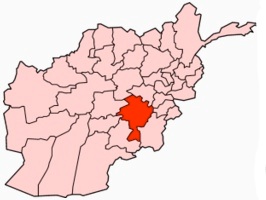 The initial statement on the strike from District Chief Mohammed Desiwal claimed that only ten people were killed, all Taliban. Later reports confirmed that the attack also hit a civilian house. They raised the toll to 14, with the additional victims the civilian bystanders in the house. Police say a number of other civilians were wounded. The initial statement on the strike from District Chief Mohammed Desiwal claimed that only ten people were killed, all Taliban. Later reports confirmed that the attack also hit a civilian house. They raised the toll to 14, with the additional victims the civilian bystanders in the house. Police say a number of other civilians were wounded.
Taliban statements also confirmed a number of civilian deaths, claiming seven in their accounts while likewise denying that they had lost 10 fighters in the incident. NATO has refused to comment at all on the situation.
Indeed, NATO operational updates for Thursday night and Friday completely ignored Ghazni Province, not mentioning any battles at all even though it appears to be well documented that a strike did indeed take place.
and.....
http://www.aljazeera.com/news/asia/2012/10/2012101064448658600.html
|


 State Department spokeswoman Victoria Nuland insisted that the US has “no doubt that this was serious military equipment.” This is in spite of the Turkish government providing


No comments:
Post a Comment