http://www.debka.com/article/22078/Home-Front-Officer-Missile-attack-would-force-massive-evacuation-of-Tel-Aviv

http://www.debka.com/article/22075/US-EU-fake-Iran%E2%80%99s-consent-to-discussing-enrichment-to-fend-off-Israeli-action

Home Front Officer: Missile attack would force massive evacuation of Tel Aviv
DEBKAfile Special Report June 12, 2012, 6:18 PM (GMT+02:00)
Tel Aviv
Col. Adam Zusman, Home Front Commander of Israel’s Dan region (Tel Aviv and its environs), told AFP Tuesday, June 12, "In case of a missile attack on the centre of Israel, especially unconventional attacks and if buildings are destroyed, the population from Tel Aviv and other cities will be evacuated and relocated in other areas of the country."
The officer did not say to where the roughly two million inhabitants of the Dan region’s core towns of Tel Aviv, Bat Yam, Holon, Petakh Tikva, Ramat Hasharon, Ramat Gan, Givatayim, Bein Brak, Herzliya, Or Yehuda, Givat Shmuel and Kiryat Ono, would be evacuated. DEBKAfile’s military sources estimate they will be relocated in the southern mostly desert Negev region. The outer Gush Dan ring includes some 3 million people.
The officer did not say to where the roughly two million inhabitants of the Dan region’s core towns of Tel Aviv, Bat Yam, Holon, Petakh Tikva, Ramat Hasharon, Ramat Gan, Givatayim, Bein Brak, Herzliya, Or Yehuda, Givat Shmuel and Kiryat Ono, would be evacuated. DEBKAfile’s military sources estimate they will be relocated in the southern mostly desert Negev region. The outer Gush Dan ring includes some 3 million people.
Col. Zusman said Israel continued to face serious threats from Iran and its allies, the Lebanese terrorist group Hezbollah and Gaza's Hamas rulers. He did not refer to Syria.
"In the next war, nobody will be able to drink a coffee in Dizengoff," he said, referring to a popular street in downtown Tel Aviv. "Israeli civilians will have to face the threat. Today, every civilian is threatened in Israel."
"In the next war, nobody will be able to drink a coffee in Dizengoff," he said, referring to a popular street in downtown Tel Aviv. "Israeli civilians will have to face the threat. Today, every civilian is threatened in Israel."
Thirty percent of the Israeli population under his command are short of gas masks.
Zusman added Israel has some of the "most sophisticated" anti-aircraft system in the world, but that the Jewish state could not count on any system for total protection. "We are getting ready for the worst-case scenario."Until now, Israeli officials and high-ranking officers have never talked openly about the potential outcome of a concentrated missile attack on central Israel, although two days ago, the deputy chief of staff, Maj. General Yair Naveh disclosed that Syria had the biggest arsenal in the world of chemical weapons and also rockets able to strike every part of Israel.
DEBKAfile’s military sources report that plans were drawn up to evacuate Tel Aviv and some of its outlying towns two years ago when it turned out that in a potential war, that centralregion might be attacked with missiles carrying “dirty” (radioactive) warheads which spreads contamination across an area of several square kilometers, or containing poison chemicals, nerve gas or biological substances.
While Iran is the only possible source of nuclear bombs, although none are yet operational, the other types of unconventional weapons are possessed by Iran, Syria and Hizballah.
Israel’s Defense Forces area also prepared for a nuclear or dirty bomb attack coming from the Mediterranean Sea to the West.
While Iran is the only possible source of nuclear bombs, although none are yet operational, the other types of unconventional weapons are possessed by Iran, Syria and Hizballah.
Israel’s Defense Forces area also prepared for a nuclear or dirty bomb attack coming from the Mediterranean Sea to the West.
Col. Zusman did not go into the logistics of a massive population transfer from Tel Aviv or the measures to sustain them as refugees. However, because of the awareness of Tel Aviv’s potential danger, building was halted there on a new underground facility for the IDF General Command, which unlike the present war room was planned to withstand intense missile attack. Our military sources report that an alternative site has been reserved to house the high command in the event of war.
and...
http://www.debka.com/article/22075/US-EU-fake-Iran%E2%80%99s-consent-to-discussing-enrichment-to-fend-off-Israeli-action
US, EU fake Iran’s consent to discussing enrichment to fend off Israeli action
DEBKAfile Special Report June 12, 2012, 10:05 AM (GMT+02:00)
Catherine Ashton and Saeed Jalili in Istanbul
A spokesman for EU foreign executive Catherine Ashton, who heads the six-power group in nuclear negotiations with Iran, reported Monday night, June 11, that Tehran is now willing to discuss high-grade uranium enrichment in the next round of nuclear talks in Moscow on June 18-19.
The claim is false. Tehran consistently refuses to discuss its “right to enrichment” and threatened not to turn up for the Moscow session after US Secretary of State Hillary Clinton demanded last week that Iran come to the table with “concrete plans” for curbing uranium enrichment up to 20 percent purity.
Iran has not backtracked: Ashton got nothing new from an hour of tense conversation with senior negotiator Saeed Jalili and had to be satisfied with issuing the noncommittal statement, “The Iranians agreed on the need for Iran to engage on the (six powers') proposals, which address its concerns on the exclusively peaceful nature of the Iranian nuclear program."
Enrichment remained unmentioned – least of all, any reference to the international inspectors’ discovery that Iran was enriching uranium up to 27 percent - and the “exclusively peaceful nature” of Iran’s nuclear program was endorsed.
From the outset, the talks between the six powers (US, China, Russia, Germany, France and Britain) in Istanbul (April 14) and Baghdad (23.5) and Tehran were falsely presented by the US and the European Union as different from previous diplomacy in that Tehran was now prepared to discuss the controversial aspects of its nuclear program.
This sham presentation of Iran puts diplomacy on artificial life support. Admission of is demise would leave the powers face to face with the only remaining path, i.e., military action - to which President Barack Obama is committed if all other options failed - either by the United States or Israel with US support.
The International Atomic Energy Agency Director Yukiya Amano toed the line Monday, June 11, by denying that IAEA negotiations with Iran had broken down Friday, June 8, of IAEA on inspections of its suspect nuclear sites, particularly the Parchin military complex where nuclear-related explosives tests are believed to have been conducted.It wasn’t the first time that Amano put a good face on a failure to get anywhere with Iran. On May 2, after coming away from a visit to Tehran empty-handed, he claimed a deal on inspections was clinched and close to signing. It never was. But the next day, the P5+1 were enabled to launch talks with Iran in Istanbul.
Iran has not backtracked: Ashton got nothing new from an hour of tense conversation with senior negotiator Saeed Jalili and had to be satisfied with issuing the noncommittal statement, “The Iranians agreed on the need for Iran to engage on the (six powers') proposals, which address its concerns on the exclusively peaceful nature of the Iranian nuclear program."
Enrichment remained unmentioned – least of all, any reference to the international inspectors’ discovery that Iran was enriching uranium up to 27 percent - and the “exclusively peaceful nature” of Iran’s nuclear program was endorsed.
From the outset, the talks between the six powers (US, China, Russia, Germany, France and Britain) in Istanbul (April 14) and Baghdad (23.5) and Tehran were falsely presented by the US and the European Union as different from previous diplomacy in that Tehran was now prepared to discuss the controversial aspects of its nuclear program.
This sham presentation of Iran puts diplomacy on artificial life support. Admission of is demise would leave the powers face to face with the only remaining path, i.e., military action - to which President Barack Obama is committed if all other options failed - either by the United States or Israel with US support.
The International Atomic Energy Agency Director Yukiya Amano toed the line Monday, June 11, by denying that IAEA negotiations with Iran had broken down Friday, June 8, of IAEA on inspections of its suspect nuclear sites, particularly the Parchin military complex where nuclear-related explosives tests are believed to have been conducted.It wasn’t the first time that Amano put a good face on a failure to get anywhere with Iran. On May 2, after coming away from a visit to Tehran empty-handed, he claimed a deal on inspections was clinched and close to signing. It never was. But the next day, the P5+1 were enabled to launch talks with Iran in Istanbul.
Still, Iran made sure that those talks got exactly nowhere. The next session in Baghdad was seriously stalled from the word go by a long-winded harangue by chief negotiator Jalili on the historical connotations of the 30-year old Khorrmanshahr battle, in which revolutionary Islamic Iran trounced Iraq although the world powers and Gulf states solidly backed Saddam Hussein.
Jalili did not mention Iran's nuclear program but, tacitly pointing at the delegations present, he commented: “The weapons that they provided to Saddam's Ba’athist regime included German Leopard tanks, British Chieftain tanks, French Exocet missiles and Super Etendard aircraft, Russian MIG fighter-planes and Scud-B missiles, German and British chemical weapons, American Sidewinder missiles and AWACS aircraft, Saudi, Kuwaiti, and Emirati dollars.
He concluded with a declaration that the Islamic republic would "never be bullied into surrendering" to “illegal and unjust demands.”
The tight lid kept on proceedings at the nuclear negotiations keeps embarrassing disclosures out of the public domain and supports the pretense of progress, when in fact Tehran has adamantly refused to open its nuclear program to real discussion.
Iran’s real attitude toward the current round of diplomacy is summed up by DEBKAfile’s Iranian and intelligence sources in five points:
He concluded with a declaration that the Islamic republic would "never be bullied into surrendering" to “illegal and unjust demands.”
The tight lid kept on proceedings at the nuclear negotiations keeps embarrassing disclosures out of the public domain and supports the pretense of progress, when in fact Tehran has adamantly refused to open its nuclear program to real discussion.
Iran’s real attitude toward the current round of diplomacy is summed up by DEBKAfile’s Iranian and intelligence sources in five points:
1. The US has run out of unilateral options for dismantling Iran’s nuclear weapons program and depends now on the cooperation of Moscow and Beijing to achieve any progress. Tehran infers this from Washington’s turn to the Russians for help in resolving the Syrian crisis.
2. The world powers facing Iran at the nuclear negotiations in Istanbul and Baghdad are not united as depicted by the Obama administration but split three ways between Russia, China and the West. It is therefore in Tehran’s interest to keep the talks dragging on for as long as possible and so widen the divisions and isolate America.
3. Tehran is aware of US plans to impose harsher sanctions very soon, including an air and marine blockade, and is not dismayed. In fact, Iranian strategists are busy figuring out ways to get around them. They also calculate that the tougher the sanctions, the higher the price they will exact for every nuclear concession. From this perspective, tougher sanctions will buy Iran more time and a faster route to a nuclear bomb.
4. Tehran regards the staging of the "P7 Talks" as part of a wider picture. A high-ranking Iranian source said: ‘If the negotiations were just about nuclear issues, why bring in the major powers? The talks could have been handled by the International Atomic Energy Agency in Vienna.Iran’s leaders are nonetheless capitalizing on those talks as a short cut to broad global recognition of the Islamic Republic’s status as a major world power.
2. The world powers facing Iran at the nuclear negotiations in Istanbul and Baghdad are not united as depicted by the Obama administration but split three ways between Russia, China and the West. It is therefore in Tehran’s interest to keep the talks dragging on for as long as possible and so widen the divisions and isolate America.
3. Tehran is aware of US plans to impose harsher sanctions very soon, including an air and marine blockade, and is not dismayed. In fact, Iranian strategists are busy figuring out ways to get around them. They also calculate that the tougher the sanctions, the higher the price they will exact for every nuclear concession. From this perspective, tougher sanctions will buy Iran more time and a faster route to a nuclear bomb.
4. Tehran regards the staging of the "P7 Talks" as part of a wider picture. A high-ranking Iranian source said: ‘If the negotiations were just about nuclear issues, why bring in the major powers? The talks could have been handled by the International Atomic Energy Agency in Vienna.Iran’s leaders are nonetheless capitalizing on those talks as a short cut to broad global recognition of the Islamic Republic’s status as a major world power.
“We are already more than half way to achieving this,” they say in Tehran.
5. In view of the first four points, Tehran believes it is on a winning roll and can afford to stand fast against giving ground on a single one of its nuclear and technological advances.
The question asked by DEBKAfile is why is Israel’s Prime Minister Binyamin Netanyahu keeping silent on this charade and even going along with it.
5. In view of the first four points, Tehran believes it is on a winning roll and can afford to stand fast against giving ground on a single one of its nuclear and technological advances.
The question asked by DEBKAfile is why is Israel’s Prime Minister Binyamin Netanyahu keeping silent on this charade and even going along with it.
and....
http://www.aljazeera.com/news/middleeast/2012/06/201261244013499431.html
| China remains target of US sanctions on Iran | |
Other major oil importers exempted in exchange for significantly cutting their purchases of Iranian oil.
Last Modified: 12 Jun 2012 07:00
| |
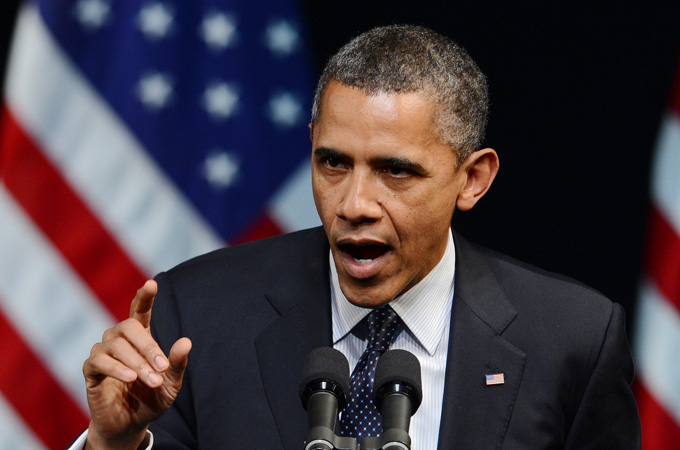
Some believe Obama wants to appear tough with China ahead of the US presidential election [EPA]
| |
| The United States has granted exemptions from tough, new sanctions on Iran's oil trade to seven more economies, leaving China the last remaining major importer exposed to possible penalties at the end of the month. Washington gave waivers to India, South Korea, Turkey and four other countries in return for significantly cutting their purchases of Iranian oil, Secretary of State Hillary Clinton said on Monday.
China, which alone buys as much as a fifth of Iran's crude exports, and Singapore, where much of the country's fuel oil is blended, did not receive such waivers, ramping up pressure on two important US trade partners in Asia.
The sanctions, which the United States may impose starting on June 28, are Washington's most aggressive measures yet to force Iran to reveal its nuclear programme. The United States and the European Union believe Iran is trying to enrich enough uranium to build a nuclear weapon, while Tehran says the programme is strictly for civilian purposes, primarily to create medical isotopes for use in procedures such as x-rays. Beyond the 27-country EU, which has banned Iranian imports from July under separate sanctions, other buyers of Iran's crude have pledged to cut purchases by up to a fifth. "By reducing Iran's oil sales, we are sending a decisive message to Iran's leaders: until they take concrete actions to satisfy the concerns of the international community, they will continue to face increasing isolation and pressure," Clinton said in a statement. She is hosting talks with ministers from India and South Korea, Iran's second- and fourth-largest oil buyers, this week in Washington. Geng Shuang, a spokesman for the Chinese embassy in Washington, said his government "opposes unilateral sanctions imposed by one country on others". He added that China will push for a diplomatic solution to the Iran nuclear issue through negotiations. South Africa, Taiwan, Malaysia and Sri Lanka will also be exempt from the sanctions, Clinton said. Japan and 10 EU countries had been granted exceptions in March. $10 billion price tag Banks and other institutions in the economies that received waivers will be given a six-month break from the threat of being cut off from the US financial system under sanctions signed late last year by President Barack Obama. China, Japan, India and South Korea cut imports by about a fifth from the 1.45 million barrels per day they were buying a year ago as they prepared for the sanctions to come into effect.
|


No comments:
Post a Comment