http://fukushima-diary.com/2012/06/fukushima-worker-tepco-is-having-difficulty-to-increase-tanks-because-of-poor-ground/
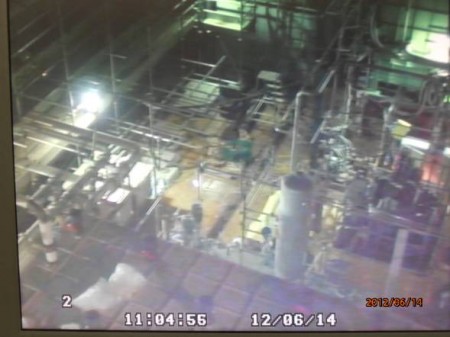
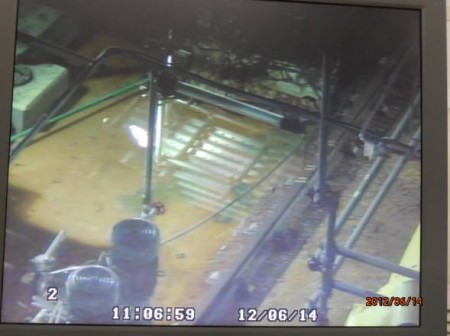
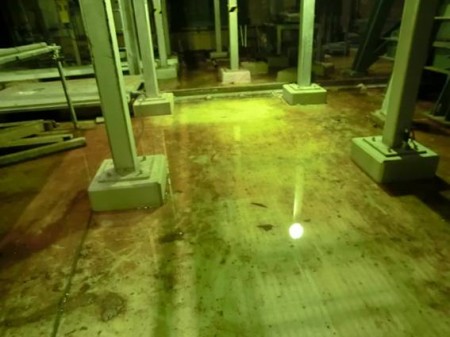
東京電力は14日、福島第一原子力発電所の高濃度汚染水の除染装置(仏アレバ社製)から汚染水3トンが漏れた、と発表した。
http://fukushima-diary.com/2012/06/fukushima-prefecture-requested-hirosaki-university-to-stop-internal-exposure-test/
http://enenews.com/japanese-diplomat-it-is-speculated-that-melt-throughs-at-reactors-1-3-might-lead-to-unintended-criticality-or-steam-explosion
Fukushima worker “Tepco is having difficulty to increase tanks because of poor ground”
Posted by Mochizuki on June 15th, 2012 · 1 Comment
Related to this article..Possible uneven settlement of reactor 4
Tepco postponed the construction to increase tanks for the contaminated water.
They were planning to start the construction in July but it will be postponed to August.
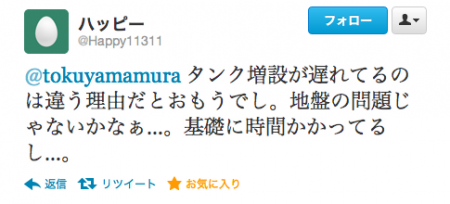
Tepco explains it is for the construction scheduling and there is still enough capacity of the tank, but actual Fukushima worker, Happy11311 tweeted like this below
<Translate> [LINK]
I think the construction of the new tanks is behind the schedule and it’s not for what Tepco explained. I think that’s because of the ground. They are taking time to build the base of the tanks.
<End>
and.....
http://fukushima-diary.com/2012/06/1-32e9-of-cesium-leaked-from-decontamination-system-of-areva/
1.32E+9 of cesium leaked from decontamination system of Areva
Posted by Mochizuki on June 15th, 2012 · 1 Comment
6/14/2012, Tepco announced 3 tones of contaminated water leaked from the decontamination system of Areva. It contains 4.4E+8 Bq/m3 of cesium.
1.32E+9 Bq/m3 of cesium was leaked in total. The leaked amount of Strontium or Tritium is not announced.This system was stopped but it has been under circulation operation from 5/21/2012.
1.32E+9 Bq/m3 of cesium was leaked in total. The leaked amount of Strontium or Tritium is not announced.This system was stopped but it has been under circulation operation from 5/21/2012.
The leaking point is not identified yet. Tepco states it didn’t leak out of the system of Areva.
At 7:00 6/14/2012, decontamination system alerted to stop the operation. Nuclear worker confirmed 3 tones of contaminated water was leaking on the 1st floor of the building.
東京電力は14日、福島第一原子力発電所の高濃度汚染水の除染装置(仏アレバ社製)から汚染水3トンが漏れた、と発表した。
漏えいか所の特定を進めているが、外部への流出はないという。
東電によると、同日午前7時頃に除染装置の異常警報が鳴って、運転を停止。作業員が確認したところ、装置のある建屋1階の床に濃度の低い汚染水3トンがたまっていた。1立方センチ・メートルあたり440ベクレルの放射性セシウムが検出された。
除染装置は運用を停止していたが、5月21日から装置配管内の放射性物質を取り除くために循環運転を行っていた。
(2012年6月14日19時52分 読売新聞)
and.....
http://fukushima-diary.com/2012/06/fukushima-prefecture-requested-hirosaki-university-to-stop-internal-exposure-test/
Fukushima prefecture requested Hirosaki university to stop internal exposure test
Posted by Mochizuki on June 14th, 2012 · 10 Comments
Fukushima prefectural government requested Hirosaki University to stop internal exposure test “because it causes fear of Fukushima people”.
Researching team of Hirosaki university conducted radiation test for Iodine 131 taken in the thyroid for 17 people in Namiemachi, where is in planned evacuation area and 45 people who evacuated from MInamisoma to Fukushima (62 in total). The researching team obtained the permission of the citizens and local government.
To make the reliable data, they needed over 100 testees but the local medical department of Fukushima prefecture stopped them conducting further research. They commented, “The researching team is allowed to measure environmental radiation level but internal exposure test causes fear, it shall be stopped.”
To make the reliable data, they needed over 100 testees but the local medical department of Fukushima prefecture stopped them conducting further research. They commented, “The researching team is allowed to measure environmental radiation level but internal exposure test causes fear, it shall be stopped.”
The medical department states, they don’t remember that comment but they actually requested other universities to “understand the feelings of local citizens.” as well.
As the result, almost none of the internal exposure data of Iodine 131 remained.
As the result, almost none of the internal exposure data of Iodine 131 remained.
The radiation data of those 62 people are already published. On the assumption that they took Iodine 131 to their thyroid on 3/12,the total dosage of internal exposure of the 5 people exceed 50 mSv, which they had to take iodine preparation from the regulation of IAEA. However now it’s considered to be more possible that they took iodine 131 on 3/15, they are analyzing the data again.
Around the end of March 2011, Nuclear disaster headquarters of the government actually conducted thyroid internal exposure test for 1080 of 0 ~ 15 years old people living in Iidate mura but because they used the simple equipment, they couldn’t measure iodine 131 directly.
<福島原発>県が内部被ばく検査中止要請…弘前大に昨年4月
毎日新聞 6月14日(木)2時32分配信
東京電力福島第1原発事故後、福島県浪江町などで住民の内部被ばくを検査していた弘前大の調査班に、県が検査中止を求めていたことが分かった。県の担当者は事実確認できないとしつつ「当時、各方面から調査が入り『不安をあおる』との苦情もあった。各研究機関に『(調査は)慎重に』と要請しており、弘前大もその一つだと思う」と説明。調査班は「きちんと検査していれば事故の影響を正しく評価でき、住民も安心できたはずだ」と当時の県の対応を疑問視している。
毎日新聞 6月14日(木)2時32分配信
東京電力福島第1原発事故後、福島県浪江町などで住民の内部被ばくを検査していた弘前大の調査班に、県が検査中止を求めていたことが分かった。県の担当者は事実確認できないとしつつ「当時、各方面から調査が入り『不安をあおる』との苦情もあった。各研究機関に『(調査は)慎重に』と要請しており、弘前大もその一つだと思う」と説明。調査班は「きちんと検査していれば事故の影響を正しく評価でき、住民も安心できたはずだ」と当時の県の対応を疑問視している。
弘前大被ばく医療総合研究所の床次眞司(とこなみ・しんじ)教授らは昨年4月12~16日、放射線量が高く、後に計画的避難区域に指定された浪江町津島地区に残っていた17人と、南相馬市から福島市に避難していた45人の計62人について、住民や自治体の了解を得ながら甲状腺内の放射性ヨウ素131を測定した。このうち3人は2度測定。検査の信頼性を高めるためには3桁の被験者が必要とされ、その後も継続検査の計画を立てていた。ところが県地域医療課から「環境の数値を測るのはいいが、人を測るのは不安をかき立てるからやめてほしい」と要請されたという。
ヨウ素131は甲状腺にたまりやすく、がんのリスクを高めるとされる一方、半減期は8日と短く、早期検査しなければ原発事故の影響を把握できない。床次教授は「放射線への不安が長引いているのは当時の情報がないからだ」と指摘する。
県地域医療課の担当者は「やりとりの詳細は記憶にない。弘前大以外にも県の災害対策本部として『住民の心情を察してほしい』とお願いしてきた」と説明する。だが、こうした要請の結果、事故初期段階でのヨウ素131の内部被ばく実測データはほとんど残されなかった。
62人の検査データは既に公表され、事故翌日の昨年3月12日にヨウ素を吸引したと仮定して内部被ばくの積算線量を推計したところ、5人が国際原子力機関の定めた甲状腺がんを防ぐヨウ素剤服用基準の50ミリシーベルトを超えていた。ただし現在は3月15日にヨウ素を吸引したとの見方が有力になっており、再解析が進められている。
甲状腺の内部被ばく検査を巡っては、国の原子力災害対策本部も3月下旬、飯舘村などの0~15歳の計1080人に実施したが、これはヨウ素を直接測ることができない簡易式の検出器だった。【町田結子】
and....
http://fukushima-diary.com/2012/06/metro-govt-denies-mizumoto-park-in-tokyo-needs-radiation-decontamination/
Metro gov’t denies Mizumoto park in Tokyo needs radiation decontamination
Posted by Mochizuki on June 13th, 2012 · 2 Comments
<Quote> [Mainichi]
The Tokyo Metropolitan Government has rejected a local politician’s call to decontaminate a park where high concentrations of radioactive cesium have been detected, saying radiation levels are not high enough to warrant a cleanup.
The high concentrations in Katsushika Ward’s Mizumoto Park were found earlier by Japanese Communist Party (JCP) members of the metropolitan assembly, and JCP assemblyman Tamio Tazoe called for the decontamination of the site in a recent session. The metropolitan government, which detected a radiation dose of 0.99 microsieverts per hour in tests at the park on June 11, rejected Tazoe’s request, stating the emissions did not reach the national limit.
According to the Tokyo Bureau of Environment, it conducted the June 11 measurements at the request of the Ministry of Education, Culture, Sports, Science and Technology (MEXT), which had been contacted by the JCP. It says bureau workers took the 0.99 microsieverts per hour reading a meter above the ground where the JCP members had earlier found the high cesium concentrations. About 60 meters away in the middle of the park’s parking lot, however, the bureau says it measured a dose of just 0.18 microsieverts per hour.
In October last year, the national government established standards whereby MEXT could be contacted if localized radiation levels were on average one microsievert per hour higher than surrounding areas.
Bureau chief Teruyuki Ono stated that the measurements taken this time were below the national limit and that he thought an overall radiation survey of Tokyo government facilities was “basically unnecessary.”
and...
http://enenews.com/japanese-diplomat-it-is-speculated-that-melt-throughs-at-reactors-1-3-might-lead-to-unintended-criticality-or-steam-explosion
[...]I was also astonished to hear that many Japanese political leaders were not aware of the potential global catastrophe because they were not told anything about it by TEPCO. I find it difficult to understand their mindset. Why would the Japanese political leaders think it appropriate to depend on one source (with an obvious and inherent conflict of interest) to judge what issues have resulted from the Fukushima accident and who is most appropriate to handle it? As a result of this myopia, Japan’s leadership lacks a clear picture of the situation and has little idea where it is steering its country and people.Let me clarify briefly why Fukushima Dai-ichi remains an enormous danger for which no scientists can recommend a solution at the moment.[...]
- In reactors 1, 2 and 3, complete core meltdowns have occurred. Japanese authorities have admitted the possibility that the fuel may have melted through the bottom of the reactor core vessels. It is speculated that this might lead to unintended criticality (resumption of the chain reaction) or a powerful steam explosion – either event could lead to major new releases of radioactivity into the environment.
- Reactors 1 and 3 are sites of particularly intense penetrating radiation, making those areas unapproachable. As a result, reinforcement repairs have not yet been done since the Fukushima accident. The ability of these structures to withstand a strong aftershock earthquake is uncertain.
- The temporary cooling pipes installed in each of the crippled reactors pass through rubble and debris. They are unprotected and highly vulnerable to damage. This could lead to a failure of some cooling systems, causing overheating of the fuel, further fuel damage with radioactive releases, additional hydrogen gas explosions, possibly even a zirconium fire and fuel melting within the spent fuel pools.
- Reactor No. 4 building and its frame are serious damaged. The spent fuel pool in Unit 4, with a total weight of 1,670 tons, is suspended 100 feet (30 meters) above ground, beside a wall which is bulging outward. If this pool collapses or drains, the resulting blast of penetrating radiation will shut down the entire area. At the Fukushima Dai-ichi nuclear power station, the spent fuel pools alone contain an amount of cesium-137 that is 85 times greater than at Chernobyl.
[...]
- Reactor No. 4 building and its frame are serious damaged. The spent fuel pool in Unit 4, with a total weight of 1,670 tons, is suspended 100 feet (30 meters) above ground, beside a wall which is bulging outward. If this pool collapses or drains, the resulting blast of penetrating radiation will shut down the entire area. At the Fukushima Dai-ichi nuclear power station, the spent fuel pools alone contain an amount of cesium-137 that is 85 times greater than at Chernobyl.


No comments:
Post a Comment