http://hat4uk.wordpress.com/2012/07/31/greek-crisis-geithner-intervention-threatens-to-split-athens-coalition/
 Venizelos….inspecting the American gravy train?
http://blogs.telegraph.co.uk/finance/ambroseevans-pritchard/100019218/temptations-of-a-peseta-default-in-spain/
http://www.telegraph.co.uk/finance/debt-crisis-live/9439261/Debt-crisis-live.html
and the swiss bond curve continues to flatten..... ten year currently at .47 yield , 7 year bond at just .16 yield !
© SIX Swiss Exchange
 Cash reserves are almost zero. It is risky to say until when (they will last) as it always depends on the budget execution, revenues and expenditure [...] But we are certainly on the brink, we did not receive the aid tranche we were supposed to and we have the pending issue of an ECB bond maturing on August 20.
The new three-party coalition came into power on the basis of promising to renegotiate the terms of the EU/IMF bail-outs, and the government does therefore not have the democratic legitimacy to vigorously implement further deep budget cuts. The two-left leaning parties in the three-party coalition (Pasok and DIMAR) are particularly reluctant to implement further cuts and want to focus on easing the social pain caused by austerity. The centre-right New Democracy party will find it increasingly difficult to continue backing the austerity agenda without risking a collapse of the fragile coalition. A new election would probably lead to a victory of the left-wing Syriza party that could take Greece out of the euro zone.
Cash reserves are almost zero. It is risky to say until when (they will last) as it always depends on the budget execution, revenues and expenditure [...] But we are certainly on the brink, we did not receive the aid tranche we were supposed to and we have the pending issue of an ECB bond maturing on August 20.
The new three-party coalition came into power on the basis of promising to renegotiate the terms of the EU/IMF bail-outs, and the government does therefore not have the democratic legitimacy to vigorously implement further deep budget cuts. The two-left leaning parties in the three-party coalition (Pasok and DIMAR) are particularly reluctant to implement further cuts and want to focus on easing the social pain caused by austerity. The centre-right New Democracy party will find it increasingly difficult to continue backing the austerity agenda without risking a collapse of the fragile coalition. A new election would probably lead to a victory of the left-wing Syriza party that could take Greece out of the euro zone.
No other country suffering such a recessionary shock has achieved so much on the fiscal adjustment front
GREEK CRISIS: Geithner intervention threatens to split Athens coalition
 Venizelos….inspecting the American gravy train?
Commentators on the Coalition/Troika negotiations are underestimating the geopolitical dimension
Emboldened by an American promise of support – and terrified of being wiped out politically if further Troika burdens are placed upon the Greek people – the faux and moderate Left part of the Greek Coalition is in disagreement with right-wing Prime Minister Antonis Samaras this evening about how to proceed in its negotiations with the EU/ECB/IMF triad. The Troika itself (aware of an increasing US influence in Greece) is treading more softly than it was last week. Against a background of growing anger in Germany, this is now an extremely unstable situation for the debt markets to analyse…and one from which America can benefit enormously.
The decision to hand tonight (Tuesday) in Athens is which way to jump – into Merkel’s FiskalUnion, or under Geithner’s cloak of protection. And it looks like that choice is causing a split between Right and Left. The coalition leaders met on Monday evening to finalise the austerity proposals, but there was no agreement: Venizelos and Kouvelis suggested that there should be no more taxes, and a renegotiation of the repayment timelines. Samaras disagreed.
But note this from the Collyns-reassured Finance Minister Stournaras: “The point is that our choices should not annul our ability to negotiate and remain in the eurozone….either we take the necessary measures or we return to the drachma within two months”. This isn’t an ultimatum from the American-connected Finance Minister: he is saying, “Make your bloody minds up”. However, just in case anyone was in doubt about the poo-or-get-off-the-pot nature of the situation, his Deputy Christos Staikouras told NET National TV, “Cash reserves are almost zero. It is risky to say until when [they will last] as it always depends on the budget execution, revenues and expenditure. But we are certainly on the brink, we did not receive the aid tranche we were supposed to and we have the pending issue of an ECB bond maturing on August 20th.”
This afternoon BST, PASOK leader Evangelo Venizelos presented to his parliamentary group of MPs a 10-point strategic framework, reiterating calls for the extension of Greece’s fiscal adjustment period by two years. So in many ways at the minute, the Geithner envoy intervention is having a telling effect. As we’ve seen for some time now, this issue is about more than Greek eurozone membership: it is about even more than Greek contagion. It is about securing America’s future.
A number of American Sloggers emailed and threaded after the latest update on the long-running plan by Washington and the Pentagon to hive Greece off from Europe….and Germany’s resistance to it. A common reaction was that the US has many bases already, and the entire gamble wasn’t worth it. I comment threaded myself at one stage, to make this point:
‘It’s not just oil/minerals or just a base or just Islamism: it’s the confluence of all that plus Russian, Chinese, German and Turkish influence in the area. The US is a fading Empire desperate to carry on being the Top Cop on the planet. Geopolitics is as much about egomania as it is left-brain stuff.’
An influential Greek wrote to me today as follows:
‘I read your article today. More and more frequent visits of U.S. agents in Greece have the purpose to convince Greece to go to a new nest. If this can be achieved there will be two two benefits for the US: the weakening of Europe, and the strengthening of Israel and US influences in the Middle East. I believe we will see more of this in the future – the “Greek corridor” (Israel-Cyprus-Greece) [that] can ensure the necessary survival of Israel while in case of hot crisis , it can be used to transport aid to the Theatre of Operations in the Middle East. This vital corridor cannot and should not be allowed to be checked by Turkey as it will then be vulnerable to any intervention.’
I posted on Aril 29th last about the electronic comms cable being jointly laid by Israel, Cyprus and Greece. These three nations see themselves as inextricably linked and capable of leveraging their strategic importance to the big boys. Last June 21st, I wrote a piece about Putin’s ambition to turn Cyprus into a Mediterranean Cuba. It took the MSM a week to catch on to that one. Last year, the Russians gave Cyprus a $2.5 bn loan at a massively discounted rate…on vastly better terms than those offered by the catatonics in Brussels. The Kremlin has many servicemen on the island, and many investments in the Greek half, while the President is a pro-Moscow Communist. Turkish Cyprus is a hotbed of Islamism, and was a refuelling point for the soi-disant ‘peace flotillas’ of which we heard so much in 2010.
Since last February, I have been a lone voice using sound sources, local knowledge and strategic nous to show a consistent American attempt to hive off Greece and thus provide both reassurance and supplies to what security services throughout the West now refer as The Greek Corridor. My piece on Wall-Street cooperation with Washington to get Greece ‘amputated’ and thus ripe for American adoption went viral very quickly on February 16th this year. The guys over at Zero Hedge still think I’m a hoaxer: but that plan keeps resurfacing, and as time goes on it gets harder and harder to deny it. I said Geithner’s envoy had given his Greek friends a ticket to ride, and now Geithner is here himself.
To get your head round this, the first thing one must do is to stop thinking about Greece as a small country with a big debt, full stop. This is geopolitics, not conspiracy theory – and geopolitics is often about opportunity. Greece is being bullied by Berlin-am-Brussels because, without making an example of them and playing for time, Franco-German banks would’ve fallen over and caused a major disaster. But it didn’t take long for American thinkers to see this desperate ploy as their big chance to cement a presence where it really counts at the moment: at the south-eastern end of the Mediterranean.
Others dismiss Greek Aegean resources as chickenfeed, and point up the strong Turkish-held belief that some of them belong to Ankara anyway. But this is precisely what it’s all about. Let me offer you something that every knowledgeable writer in this theatre accepts, be they Greek, American or German: All three intelligence services have massively underplayed the undersea wealth under the Aegean. So too has Mossad, without a shadow of a doubt. Putin (ex KGB) knows this, Schäuble (ex German Interior Minister) knows this, the Fed Treasury knows it, and so too does the Athens Coalition. Both the Americans and the Russians are determined that Turkey won’t get its hands on one ounce of rare earth or a single drop of oil. These are the stakes, and they’re why this is massively important.
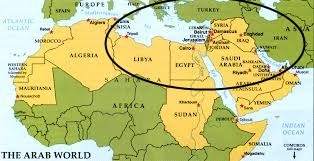
If one draws a slightly wobbly ellipse within the Mediterranean/Arab world as follows -
- what results is the sphere of influence every major national player would like to be in….because it has rapid flashpoint response, the overwhelmingly biggest energy form on the planet, the epicentre of unstable religious fanaticism, and above all massive supplies of post-modern minerals required for the next stage of economic growth. The Slog essay on Syrian complexities last Saturday used precisely the same perspective.
Talk to those on the ground and at sea in the Med area, and you will learn that Cyprus is swarming with Russian engineers and Greece with American engineers – in the same way that Black Africa is covered in Chinese engineers. The American elite doesn’t give a crap about Europe beyond two considerations: the euro is a potential competitor to the dollar, and the eurozone screw-up is a massive threat to Wall Street and US debt management costs. It just happens that on the arse end of Europe is Greece, and neutralising its debt-threat is the treble-chance jackpot for Washington: less fiscal contagion, more access to industrial wealth, and the long arm of the law made shorter when things get out of hand.
Important geopolitical factors vary and transmute over time. In the nineteenth century it was naval routes, trade access and Imperial cachet. In the twentieth century, energy, political philosophy, and nuclear stability. In the 21st so far, it is morphing into energy, efficient exploitation, control of fanaticism, and – connected to this – power over nuclear proliferation. But always, unfailingly, it is about business.
And the split between Samaras and his two fellow Coalition leaders is becoming clear as Greece says it plans to have an austerity plan in August ....
| ||||||||


http://blogs.telegraph.co.uk/finance/ambroseevans-pritchard/100019218/temptations-of-a-peseta-default-in-spain/
Temptations of a Peseta default in Spain

http://www.telegraph.co.uk/finance/debt-crisis-live/9439261/Debt-crisis-live.html
and the swiss bond curve continues to flatten..... ten year currently at .47 yield , 7 year bond at just .16 yield !
| Government bonds |
11.46 Greece is "on the brink" and fast running out of cash, deputy finance minister Christos Staikouras has warned. He told state TV:
Cash reserves are almost zero. It is risky to say until when (they will last) as it always depends on the budget execution, revenues and expenditure [...] But we are certainly on the brink, we did not receive the aid tranche we were supposed to and we have the pending issue of an ECB bond maturing on August 20.
11.32 The dissent is growing among German MPs over potential ECBbond buying.
Hans Michelbach, a member of the Christian Social Union party, said bond buying via the eurozone's permanent bail-out pot (the European Stability Mechanism) entailed "incalculable risks" and would be a "dangerous attempt" to bypass Article 123 of the Lisbon Treaty that prevents the central bank from financing governments directly.
11.16 The Spanish region of Catalonia has temporarily stopped grant payments to hospitals and elderly care homes because it cannot afford to pay them.
"It is due to a problem of liquidity," a spokeswoman for the Catalan regional government's economy ministry told AFP. She said that the payments would resume in September.
10.30 Here's a closer look at today's unemployment figures, and how the UK compares:
10.00 BREAKING NEWS...
Eurozone unemployment has risen to a record level of 11.2pc in June,according to official Eurostat data. The May figure was also revised to 11.2pc, from 11.1pc.
Youth unemployment hit 22.6pc - reflecting a rate of 7.9pc in Germany, 22pc in the UK, 22.8pc in France, 29.2pc in Ireland, 34.3pc in Italy, 36.4pc in Portugal, 52.7pc in Spain and a staggering 52.8pc in Greece.
09.59 Martin Koehring at the Economist Intelligence Unit describes Greece's additional austerity measures as "not only economically and socially damaging but also politically highly controversial". More from Mr Koehring:
The new three-party coalition came into power on the basis of promising to renegotiate the terms of the EU/IMF bail-outs, and the government does therefore not have the democratic legitimacy to vigorously implement further deep budget cuts. The two-left leaning parties in the three-party coalition (Pasok and DIMAR) are particularly reluctant to implement further cuts and want to focus on easing the social pain caused by austerity. The centre-right New Democracy party will find it increasingly difficult to continue backing the austerity agenda without risking a collapse of the fragile coalition. A new election would probably lead to a victory of the left-wing Syriza party that could take Greece out of the euro zone.
On balance, however, the troika of international lenders will try to help Greece find the necessary cuts in the next couple of weeks to ensure that Greece gets the next bail-out tranche in September. The euro zone is currently not prepared for a Greek euro exit, and neither the new Greek government nor Greece's international lenders are willing to risk a Greek exit over the latest austerity plans. This makes an eventual compromise likely in August.
09.55 Greece's coalition government avoided the tricky subject of budget cuts at a meeting yesterday and discussed longer-term strategy measures instead, according to Democratic Left leader Fotis Kouvelis.
The government is yet to finalise a €11.5bn package of cuts that must be agreed in order to unlock its next bail-out tranche.
09.42 Evangelos Venizelos, leader of Greece's PASOK party, has admitted that the country's bail-out programme is off track and urged parliament to seek talks with ECB and EU officials.
He also reiterated calls for a two-year extension, until 2016, to implement Greece's savage budget cuts. He told parliament:
No other country suffering such a recessionary shock has achieved so much on the fiscal adjustment front
09.18 Europe's largest economy also saw retail sales fall for a third straight month.
German retail sales fall by 0.1pc on a monthly basis in June, according to the Federal Statistics Office. Analysts surveyed by Bloomberg had expected a 0.5pc rise.
09.15 Lots of data out this morning from Europe.
Spanish retail sales fell by 5.2pc on an annual basis in June, according to the National Institute of Statistics.
This follows a 4.9pc fall in May, and marks the 24th straight month of decline.
Earlier this month, Spain introduced new legislation to try to boost ailing retail sales that could signal the end of the country's traditional three-hour siesta.


No comments:
Post a Comment