http://www.upi.com/Top_News/World-News/2013/01/14/Report-says-Assad-residing-on-warship/UPI-95401358162184/
RIYADH, Saudi Arabia, Jan. 14 (UPI) -- Syrian President Bashar Assad and his family have been living on a warship, with security provided by Russia, intelligence sources told a Saudi newspaper.
An Al-Watan report Monday says the family and Assad aides are residing on the ship in the Mediterranean Sea and that he travels to Syria by helicopter to attend official meetings and receptions.
Otherwise, he stays on the warship, the sources told the Arabic language newspaper.
When he flies to his embattled country, the president lands at undisclosed locations and is transported to the presidential palace under heavy guard, the sources said.
The Russian-guarded warship provides a safe environment for Assad, who has lost confidence in his own security detail, the report said.
Assad's presence on the warship suggests he has been granted political asylum by Russia but there has been no official comment from Moscow, the newspaper said.
The circumstances reinforce Russian Foreign Minister Sergei Lavrov's comment Sunday that Assad's removal from power is "impossible to implement," the newspaper said.
Assad's presence on the ship could be a sign of looming negotiations on the conflict in Syria, the report said.
"It is necessary to make everybody, including the opposition, which is still categorically denying any dialogue, to sit down at the negotiating table, Radio Free Europe Radio Liberty quoted Lavrov as saying during a visit to the Ukraine.
"It is necessary to make everybody, including the opposition, which is still categorically denying any dialogue, to sit down at the negotiating table, Radio Free Europe Radio Liberty quoted Lavrov as saying during a visit to the Ukraine.
and......
http://www.lobelog.com/should-iran-be-included-in-syria-conflict-diplomacy/
( At the end of the day , any negotiation that will be meaningful will need Iran at the table - that is just real - politic )
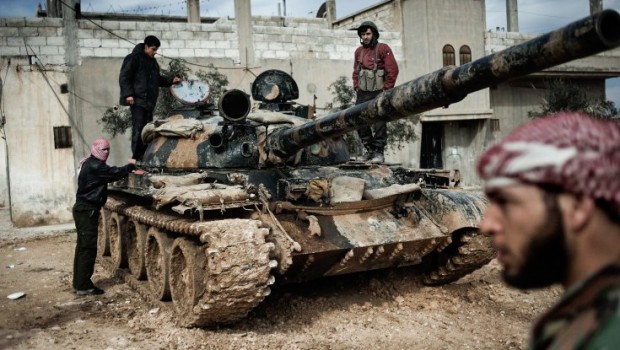
Published on January 11th, 2013 | by Jasmin Ramsey
0Should Iran be Included in Syria Conflict Diplomacy?
 Share by Email
As former top State Department intelligence specialist Wayne White points out for Lobe Log, in the absence of a tenable ceasefire agreement, the quagmire that is the Syrian civil war will likely intensify, thereby only worsening post-Assad scenarios.
“The bottom line is that a sort of Catch-22 situation is continuing on the diplomatic front,” wrote White last week. “[T]he side that believes it has the upper hand and will eventually prevail militarily (currently the opposition) is unlikely to accept a truce because a ceasefire would interfere with its ability to sustain intense military pressure on the other side.”
Anyone hoping for even a temporary cessation to the deadly violence would have been shattered by Bashar al-Assad’s rare speech in Damascus on Sunday, where he thanked his base for showing “the whole world that Syria is impervious to collapse and the Syrian people impervious to humiliation.” The defiant president refused to step down while claiming he was ready to talk with the opposition. But as White noted, Assad did so while urging his supporters to continue fighting against the “bunch of criminals” who oppose him.
This political gridlock makes creative diplomacy appear all the more important in bringing an end to the ongoing carnage that’s ravaging the country. Asked if the Iranians should be included in diplomatic efforts, former top CIA analyst Paul Pillar told Lobe Log that ”Any multilateral diplomatic initiative has a better chance of success if all the parties with leverage to exert are included.”
Pillar is well aware of the fact that this may be easier said than done. UN and Arab League mediator Lahkdar Brahimi remains in between a rock and a hard place — expected to please everyone while not being able to please anyone. The brutal force that the government deployed to crush what were initially peaceful protests seems to have pushed both sides beyond the point of no return. Presently, the opposition’s recent disgust with Brahimi’s choice of Russia as the venue for his recent truce initiative has been overshadowed by the regime’s accusations of Brahimi’s “bias toward sides known for conspiring against Syria and the Syrian people.”
It was in this atmosphere of hopelessness that news surfaced Wednesday of over 2,130 Syrian prisoners being released by the regime in exchange for 48 Iranians abducted during what they claimed to be a religious pilgrimage in August. (The opposition had said that the Iranians were members of Iran’s Revolutionary Guard, which Tehran adamantly denied.) The massive exchange again raises the question of whether Iran has a role to play in bringing an end to the Syrian crisis.
This question may be more difficult to answer now than it was when the fighting first broke out over a year ago. On the one hand, the prisoner swap supports the argument that Iran holds considerable influence over Assad’s government and could help shift events toward a “peace process”. Throughout last year, Iran tried to inject itself into diplomatic processes taking place over Syria by, for example, supporting a failed United Nations-Arab League peace plan and making is own proposal in December.
“On Syria, Iran is pursuing a dual track policy of support for the Syrian Government as it faces internal instability, while pressing Damascus to take measures to reduce tensions, open the grounds for negotiations with the opposition and find a path towards national unity and conciliation,” said Ambassador Seyed Hossein Mousavian, the former spokesperson for Iran’s nuclear negotiating team (2003 to 2005) and now a visiting scholar at Princeton University.
“Iran can play a major constructive role on the Syrian crisis,” he said.
That Iran reportedly included Syria in its five-point proposal presented during nuclear talks in Moscow last June could be an indication that it would be willing to bargain away its support for the regime — if it was provided with enough incentive. (Recall how the government of Mohammad Khatami reportedly offered to end Iran’s material support to Palestinian groups opposing Israel in a March 2003 proposal for “broad dialogue” with the US that was rejected by the Bush administration.)
On the other hand, this prisoner swap, which amounts to about 44 Syrians for every 1 Iranian, displays the extent to which Iran is tied to Assad’s repression. If the war in Syria is really about the major powers that are backing each side (Russia, Iran and China for the regime, and Turkey, Saudi Arabia, Qatar and Western countries for the opposition), and since the fall of Assad would indeed be a “major blow” to the Iranians, can Tehran really be expected to help its foes?
For now, talks with Iran over its nuclear program are expected to resume shortly, even if they’re already off to a bad start. But as the fighting in Syria produces ongoing suffering while the Israeli-led campaign against Iran’s nuclear program continues to involve the potential of a costly military conflict, considering all options on the Syrian diplomatic table be more important now than ever.
“If the Iranians are excluded from a joint effort to do something helpful, they are only more likely to do something unhelpful, said Pillar, who advocates a more flexible US negotiating posture with Iran.
“Engagement with Iran over Syria also can reap secondary benefits in other areas, such as the negotiations over Iran’s nuclear program, by expanding channels of communication and bargaining space,” he said.
Photo: Feb. 23, 2012. A Free Syrian Army member prepares to fight with a tank whose crew defected from government forces in al-Qsair. Freedom House photo/Creative Commons/Flickr.
and.....
http://www.dnaindia.com/world/report_syrian-rebel-leader-assasinated-sparking-fears-of-turf-war_1787929
The killing of a senior Islamist rebel commander near Syria's border with Turkey could indicate a turf war between armed groups that will hamper their struggle to overthrow Syrian president Bashar al-Assad, sources told Reuters.
Thaer al-Waqqas, northern commander of al-Farouq Brigades, one of Syria's largest rebel groups, was shot dead at a rebel-held position in the town of Sermin, a few kilometres from Turkey, early on Wednesday morning, rebel sources said. Al-Waqqas, they said, had been suspected of involvement in the killing four months ago of Firas al-Absi, a main jihadist leader in al Qaeda-linked al-Nusra Front, which Washington dubbed a terrorist organisation in December.
In addition to chronic supply problems and a shortage of financing and heavy weapons, the lack of unity among Syria's rebels has held back their efforts to dislodge Assad's forces. "The assassins came in a white car, disembarked and riddled Waqqas with bullets as he was at a food supply depot," one of the rebels said. He said suspicion immediately turned on Nusra. "Absi's brother is a commander in (the city of) Homs. He vowed revenge for Firas, and it seems that he has carried out his promise," the rebel said.
"Farouq is in a period of mourning now. But it seems a matter of time before the clashes with Nusra erupt in Bab al-Hawa," he added, referring to the rebel-held border crossing with Turkey where Absi was killed. The crossing is controlled by Farouq and its Sham Hawks Brigade ally. Nusra fighters are also present in the area, along with Muhajireen al-Sham, another rebel brigade allied with Nusra, according to rebels and opposition activists on the border.
There was already tension between groups like Nusra, composed mainly of former civilians and backed by foreign jihadists, and opposition groups such as Farouq that hold a larger proportion of defectors from the regular army and security apparatus, which some fear are more likely to be infiltrated by Assad’s agents. A new rebel command formed with Western, Arab and Turkish support in the Turkish city of Antalya in December appears to have done little to end divisions between the hundreds of rebel groups, especially in regions where Assad has lost control, in the northern provinces of Idlib and Aleppo near Turkey. Nusra, Farouq and the Islamist Ahrar al-Sham – the three largest rebel organisations in the north – have stayed out of the new rebel command. The US state department has said that Nusra is using the Syrian struggle for the “malign purposes” of al Qaeda and should not play a part in Syria’s eventual political transition.
‘Concentrate On Fighting Assad’
Farouq is backed by the Muslim Brotherhood, which has emerged as the best organised and most effective political player in the wake of the Arab Spring revolts and has been clawing back influence in Syria since a military crackdown killed thousands of their number in the 1980s. An official in al-Farouq Brigades said the killing of Absi was mysterious but acknowledged that it had marred ties with Nusra, but he did not blame Nusra for Waqqas’s killing. “The regime is behind the killing of Waqqas. We do not have any policy of targeting al-Nusra and we cooperate militarily in some regions with them,” the official said.
“There is talk that Waqqas, in a personal capacity, was somehow involved in the killing of Absi, and it is very damaging. The situation in Bab al-Hawa is very tense now,” he added. Veteran opposition campaigner Fawaz al-Tello, speaking from Berlin, said inter-rebel violence would increase across opposition-held areas unless the political leadership of the opposition acts to contain the fallout from Waqqas’s killing, which could include further tit-for-tat assassinations and draw in allies of the two groups.
“The way to prevent rebels from taking out each other is to have unified military commands by region under a political leadership that will be region-specific as well,” he said. “We have been seeing an attempt by Western and regional powers friendly to the revolt to build a unified military command from the top down and without logistics and support and without adhering to a political leadership.
As if one creates commands and then asks people to join them,” he added. Another opposition campaigner, who did not want to be named, said rising conflict among the rebels had harmed their effectiveness, pointing to the failure of rebels to take army bases and airports in Idlib despite months of siege. “In a way it is good the rebels are staring at military setbacks,” he said. “Perhaps now they will realise that they should stop this nonsense and concentrate on fighting Assad.”
and more on the divided loyalties among the ranks of the rebels.....
Syrian rebels sidetracked by scramble for spoils of war
Looting, feuds and divided loyalties threaten to destroy unity of fighters as war enters new phase
 Email
Email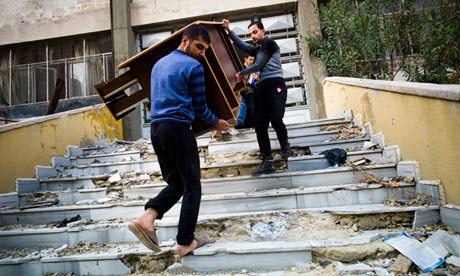
Syrians carry a desk out of a school in the Saif al-Dawla district of Aleppo. Photograph: Ghaith Abdul-Ahad
It wasn't the government that killed the Syrian rebel commander Abu Jameel. It was the fight for his loot. The motive for his murder lay in a great warehouse in Aleppo which his unit had captured a week before. The building had been full of rolled steel, which was seized by the fighters as spoils of war.
But squabbling developed over who would take the greater share of the loot and a feud developed between commanders. Threats and counter-threats ensued over the following days.
Abu Jameel survived one assassination attempt when his car was fired on. A few days later his enemies attacked again, and this time they were successful. His bullet-riddled body was found, handcuffed, in an alley in the town of al-Bab.
Captain Hussam, of the Aleppo military council, said: "If he had died fighting I would say it was fine, he was a rebel and a mujahid and this is what he had set out to do. But to be killed because of a feud over loot is a disaster for the revolution.
"It is extremely sad. There is not one government institution or warehouse left standing in Aleppo. Everything has been looted. Everything is gone."
Captured government vehicles and weapons have been crucial to the rebels since the start of the conflict, but according to Hussam and other commanders, and fighters interviewed by the Guardian over a fortnight in northern Syria, a new phase has been reached in the war. Looting has become a way of life.
"Spoils" have now become the main drive for many units as battalion commanders seek to increase their power.
The problem is particularly pronounced in Aleppo, according to Abu Ismael, a young lieutenant from a wealthy family, who ran a successful business before joining the fight against Bashar al-Assad.
Many of the battalions that entered the city in the summer of this year came from the countryside, he said. They were poor peasants who carried with them centuries-old grudges towards the wealthier Aleppans.
There was also a lingering feeling that the city – where businesses had been exploiting cheap peasant labour for several decades – had not risen up quickly enough against the Assads. "The rebels wanted to take revenge on the people of Aleppo because they felt that we had betrayed them, but they forgot that most of the people of Aleppo are merchants and traders and a merchant will pay money to get rid of his problem," Abu Ismael said. "Even as the rest of Syria was gripped by revolution, the Aleppans said, why should we destroy our business and waste our money?"
When the rebels entered the city and started looting the factories, a source of money dried up.
"In the first month and a half the rebels were really a united revolutionary group," Abu Ismael said. "But now they are different. There are those who are here only to loot and make money, and some still fight." Did Abu Ismael's unit loot? "Of course. How do you think we feed the men? Where do you think we get all our sugar, for example?"
In the chaotic economics of the war, everything has become a commodity. Abu Ismael's unit, for example, took a supply of diesel from a school compound, and every day his unit exchanges a few jerrycans of the precious liquid for bread.
Because Abu Ismael has a supply of food and fuel his battalion is more desirable than others in the sector. Commanders who are unable to feed their men tend to lose them; they desert and join other groups.
Bullets are equally important. When military installations and warehouses are looted the battalion that captures ammunition grows by cannibalising smaller, less well-equipped units that have no bullets to hand.
In a dark apartment in the Salahuddin neighbourhood of Aleppo we sat with a group of commanders who were discussing the formation of a new brigade that would bring their various battalions together. They soon turned to the topic of loot.
One of the commanders present had led an operation into the predominantly Kurdish neighbourhood of Ashrafiya in Aleppo, but according to several fighters who were there the action failed when the army counterattacked because the rebel support units that were supposed to reinforce the front instead turned their attention to looting.
"I want to know exactly what you took that day," the commander of a small unit told the leader of the assault. The commander opened a notebook to write, while another man held a flashlight above his head. "As long as one fights while the others are busy collecting loot we can't advance," he said. "The loot has to be divided equally."
The leader started to list the luxury cars and the weapons his units had found and taken, while the other commander wrote them down in the notebook. Some of the cars would be sold back to the owners – if they paid out a hefty ransom.
A reality seems to be setting in the so called rebels can't remove Assad - between the divisions between the various militias and the chasm between Al Qaeda led jihadists and nominally Syrian rebel forces - coupled with the lack of money , weapons , the winter conditions , , food for themselves and folks living in rebel held territory , if would appear stalemate conditions will continue..... thus the talk of an Arab led Coalition of the willing to unseat Assad.....


No comments:
Post a Comment