http://fukushima-diary.com/2012/04/jp-gov-is-shifting-from-decontamination-to-evacuation/

and.......
The original debris map of Reactor 4's Spent Fuel Pool (created by Hitachi) was released by TEPCO on April 23, 2012 in the document for the Working Council for "Mid-and-long-Term Roadmap towards the Decommissioning of Fukushima Daiichi Nuclear Power Units 1-4". The US Nuclear Regulatory Commission has the decay heat map of the same pool created by the US Department of Energy ("Official Transcript of Proceedings", released on May 26, 2011 (link is PDF), page 188). You overlay these two maps, and you'll get this:

福島第1原発:井戸で地下水くみ上げ 汚染水低減へ
毎日新聞 2012年04月23日 20時53分(最終更新 04月23日 21時18分)
JP gov is shifting from decontamination to evacuation
Posted by Mochizuki on April 25th, 2012 · No Comments
Related to this article..88 km of the great wall is planned to barricade Fukushima contaminated zone
Japanese government published their prediction that some areas will remain more radioactive than 20mSv/y even in 10 years, where will still be uninhabitable on 4/22/2012.
They are planning to complete decontamination in places where the radiation level is lower than 50mSv/y by March of 2014. However, they still have not made a plan for the areas where the radiation level is higher than 50mSv/y.
Though it is assumed that some of the evacuated people want to go home even if it takes time,Japanese government is inclined to the idea that spending money on supporting evacuating people is more efficient. It costs significant sum of money to decontaminate and the reliable technology is not established. It would be more efficient to spend the money on evacuating people.
政府は、東京電力福島第一原子力発電所の事故で、10年後も空間の放射線量が下がらない、原発周辺の地域では、巨額の費用がかかる除染よりも、長期間帰還できない住民への支援を充実させるべきだとして、除染を実施しないことも含め、対応を検討することにしています。
政府は、原発事故で設定した避難区域の中で、現在、年間の放射線量が50ミリシーベルト以下の地域について、2年後の2014年3月末までに除染を完了する計画ですが、50ミリシーベルトを超える地域では具体的な計画を策定していません。
こうしたなか、今月22日、政府は初めて、10年後も原発周辺では放射線量が20ミリシーベルトを超え、住民が帰還することは困難な地域が残るという予測を公表しました。
これについて政府内では、「放射線量が高い地域では、除染の作業もままならず、仮に行っても、今の技術では効果的に線量を下げることは難しい」という指摘や、「巨額の費用がかかる除染よりも、長期間帰還できない住民への支援を充実させるべきだ」といった意見が出ています。
これを受けて、政府は、こうした10年後も放射線量が20ミリシーベルトを超える原発周辺の地域では、除染を実施しないことも含め、対応を検討することにしています。しかし、避難住民の中には、仮に時間がかかっても自宅に戻りたいという人もいるとみられ、政府は、住民や自治体の意向も調査したうえで、除染を行う範囲や工程表について方針を決めることにしています。
こうしたなか、今月22日、政府は初めて、10年後も原発周辺では放射線量が20ミリシーベルトを超え、住民が帰還することは困難な地域が残るという予測を公表しました。
これについて政府内では、「放射線量が高い地域では、除染の作業もままならず、仮に行っても、今の技術では効果的に線量を下げることは難しい」という指摘や、「巨額の費用がかかる除染よりも、長期間帰還できない住民への支援を充実させるべきだ」といった意見が出ています。
これを受けて、政府は、こうした10年後も放射線量が20ミリシーベルトを超える原発周辺の地域では、除染を実施しないことも含め、対応を検討することにしています。しかし、避難住民の中には、仮に時間がかかっても自宅に戻りたいという人もいるとみられ、政府は、住民や自治体の意向も調査したうえで、除染を行う範囲や工程表について方針を決めることにしています。
and also .....
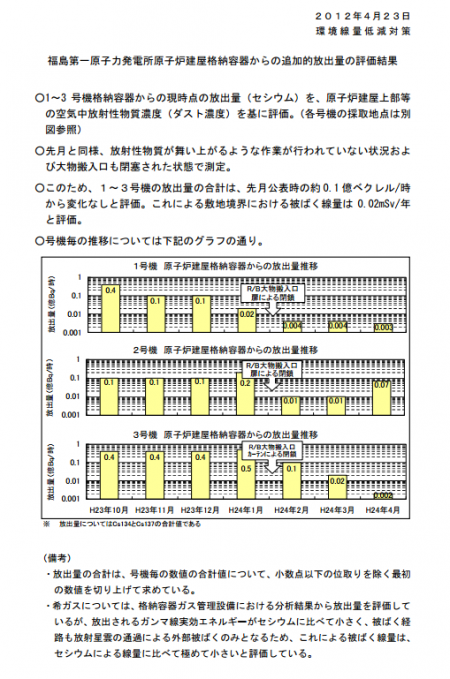
Cesium emission from reactor 2 increased 700%
Posted by Mochizuki on April 25th, 2012 · No Comments
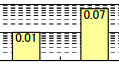
Cesium emission from reactor 2 became 7 times much as March.
It was 7 million Bq/h, which is almost the same level as October of 2011 (10 million Bq/h).
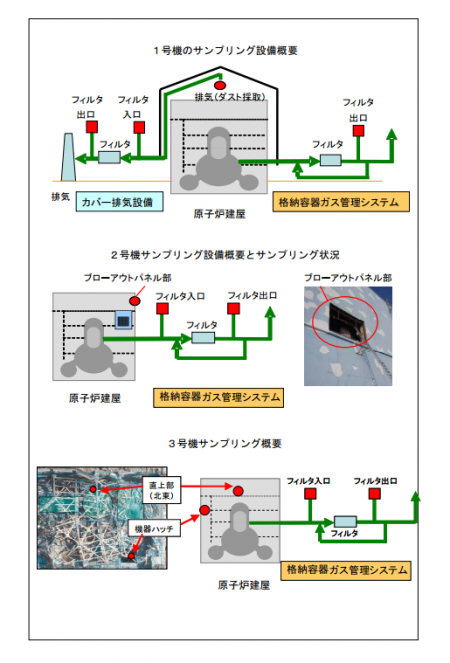
Tepco comments it was measured in the situation where dust is not blown up, major delivery entrance was closed.No explanation is given by Tepco.
and......
http://enenews.com/pressure-doubles-reactor-2-containment-vessel-start-april-tepco-trying-lower-pressure
At 11:59 am, because the tendency of pressure increase in the Primary Containment Vessel, we adjusted the exhaust gas flow of the PCV gas control system from approx. 17 m3/h to approx. 38 m3/h in order to decrease the pressure of PCV.
Pressure at 38.64 kPa g on April 23:
Pressure at 19.64 kPa g on April 2:
and.....
Title: press-Yamauchi-handout.pdf (application/pdf Object)
Authors: Yamauchi et al. (oral) & Takeda et al. (poster)
Date: Apr 21, 2012
Authors: Yamauchi et al. (oral) & Takeda et al. (poster)
Date: Apr 21, 2012
Follow-up to:
Worse than radioactive rain? After Fukushima, fallout was suspended near Earth’s surface without settling down, says new study -- "Potentially a health risk, especially for children as they breathe closer to ground"
Study: Radioactive 'black rain' HELPED Japan after meltdowns -- Substantial amount of fallout was floating near ground, and rainfall "ceased its re-suspension" -- Area was at "High Risk" beforehand
150km from Fukushima Daiichi: Radioactive plumes continued during summer -- Fallout was re-suspended during daytime by daily convection due to sunshine
and....
Japan's last online reactor to shut down
Japan's only online commercial nuclear reactor in the northernmost prefecture of Hokkaido is to be shut down for regular inspections early next month.
Hokkaido Electric Power Company released on Wednesday its regular inspection plan for the Number 3 reactor at the Tomari nuclear power plant.
The utility says it will begin reducing the reactor's power output on May 5th and complete the procedure the following day.
With the shutdown, all 50 commercial reactors in Japan will be offline if none of the reactors now halted for regular checks are allowed to resume operations.
Earlier this month, four damaged reactors at Tokyo Electric Power's Fukushima Daiichi nuclear power plant were officially removed from the list of the country's commercial reactors.
The central government has been seeking the cooperation of local communities for the resumption of two offline reactors at the Ohi nuclear power plant in Fukui Prefecture. The government says the reactors meet the government's new safety standards for resuming operations.
But it is unclear whether any of the reactors around the country now halted for inspections, including those in Fukui, can be restarted.
Hokkaido Electric Power Company released on Wednesday its regular inspection plan for the Number 3 reactor at the Tomari nuclear power plant.
The utility says it will begin reducing the reactor's power output on May 5th and complete the procedure the following day.
With the shutdown, all 50 commercial reactors in Japan will be offline if none of the reactors now halted for regular checks are allowed to resume operations.
Earlier this month, four damaged reactors at Tokyo Electric Power's Fukushima Daiichi nuclear power plant were officially removed from the list of the country's commercial reactors.
The central government has been seeking the cooperation of local communities for the resumption of two offline reactors at the Ohi nuclear power plant in Fukui Prefecture. The government says the reactors meet the government's new safety standards for resuming operations.
But it is unclear whether any of the reactors around the country now halted for inspections, including those in Fukui, can be restarted.
Wednesday, April 25, 2012 20:36 +0900 (JST)
and.......
http://ex-skf.blogspot.com/2012/04/fukushima-i-nuke-plant-reactor-4-spent.html
WEDNESDAY, APRIL 25, 2012
#Fukushima I Nuke Plant Reactor 4 Spent Fuel Pool Debris Map with NRC Heat Map Overlay
The original debris map of Reactor 4's Spent Fuel Pool (created by Hitachi) was released by TEPCO on April 23, 2012 in the document for the Working Council for "Mid-and-long-Term Roadmap towards the Decommissioning of Fukushima Daiichi Nuclear Power Units 1-4". The US Nuclear Regulatory Commission has the decay heat map of the same pool created by the US Department of Energy ("Official Transcript of Proceedings", released on May 26, 2011 (link is PDF), page 188). You overlay these two maps, and you'll get this:

The Reactor 4 SFP contains 204 new fuel assemblies and 1331 spent fuel assemblies.
(H/T anon supporter of this blog for the map. H/T reader Atomfritz for the NRC link. Thank you.)
and....
Tepco plans to pump up groundwater and discharge it to the sea
Posted by Mochizuki on April 23rd, 2012 · No Comments
200 ~ 400 m3 of groundwater flows into the basement floors of reactor 1 ~ 4 on the daily basis.
Tepco still injects 600m3 of water to reactor 1 ~3 everyday, contaminated water increases by 800 ~ 1000 m3 everyday. Currently, 98,000 m3 of contaminated water is under reactor 1 ~ 4.
Tepco still injects 600m3 of water to reactor 1 ~3 everyday, contaminated water increases by 800 ~ 1000 m3 everyday. Currently, 98,000 m3 of contaminated water is under reactor 1 ~ 4.
To reduce groundwater to flow into the basement floors by half, Tepco is going to make 14 wells (30cm diameter, 32m deep) at 80 ~ 200 m far from the plants on the mountain side.
The pumped up water will be discharged to the sea directly, but they measured tritium from one of the three wells which Tepco made experimentally. METI states they want to ask local governments and Fisheries Cooperative Association for agreement to discharge the contaminated water.
The pumped up water will be discharged to the sea directly, but they measured tritium from one of the three wells which Tepco made experimentally. METI states they want to ask local governments and Fisheries Cooperative Association for agreement to discharge the contaminated water.
福島第1原発:井戸で地下水くみ上げ 汚染水低減へ
毎日新聞 2012年04月23日 20時53分(最終更新 04月23日 21時18分)
政府と東京電力は23日、福島第1原発の建屋の地下に地下水が流れ込んで放射性物質による汚染水が増えるのを防ぐため、14本の井戸を掘って地下水をくみ上げ、直接海に流す方針を決めた。最大で1日当たり約400立方メートルとみられる地下水の流入を半分程度に減らせるという。
同日の政府・東電の中長期対策会議で報告された。これまでの汚染水の処理量は30万立方メートルを超え、現在も第1原発1〜4号機の原子炉建屋などの地下に約9万8000立方メートルの汚染水がたまっている。1〜3号機の原子炉冷却のため、1日当たり約600立方メートルを注水しているのに対し、地下水の流入は同200〜400立方メートルに達し、汚染水の低減には地下水の流入対策が鍵だった。
計画では、1〜4号機の原子炉建屋から80〜200メートル山側の高台に、井戸(直径30センチ、深さ32メートル)を14本掘り、今年秋から地下水のくみ上げを始める。ただし、試験的に掘った井戸3本のうちの1本の地下水では、ごく微量の放射性物質トリチウムが検出されたため、経済産業省は「海に流す前に地元自治体や漁協に理解を得たい」としている。
同日の政府・東電の中長期対策会議で報告された。これまでの汚染水の処理量は30万立方メートルを超え、現在も第1原発1〜4号機の原子炉建屋などの地下に約9万8000立方メートルの汚染水がたまっている。1〜3号機の原子炉冷却のため、1日当たり約600立方メートルを注水しているのに対し、地下水の流入は同200〜400立方メートルに達し、汚染水の低減には地下水の流入対策が鍵だった。
計画では、1〜4号機の原子炉建屋から80〜200メートル山側の高台に、井戸(直径30センチ、深さ32メートル)を14本掘り、今年秋から地下水のくみ上げを始める。ただし、試験的に掘った井戸3本のうちの1本の地下水では、ごく微量の放射性物質トリチウムが検出されたため、経済産業省は「海に流す前に地元自治体や漁協に理解を得たい」としている。


No comments:
Post a Comment