http://antiwar.com/blog/2013/02/14/pakistani-disapproval-of-us-highest-ever-contra-brennan-fantasy-that-drones-are-welcomed/
 With Shateri being mourned today in Tehran after a death officials say happened Tuesday, the rebel Free Syrian Army (FSA) is issuing a statement not only contradicting the timing, but the entire narrative.
 The statement was an extension of the “emergency” situation the Obama Administration has imposed on Libyasince February 2011. Today’s statement extends this emergency for yet another year.
 Since then, French troops have been bogged down in Gao, shoring up defenses and preparing for future ambushes and insurgent attacks, something which seems guaranteed to be a long-term issue.
Pakistani Disapproval of US Highest Ever, Contra Brennan Fantasy That Drones Are ‘Welcomed’
John Glaser, February 14, 2013
During John Brennan’s Senate confirmation hearings last week, Senator Susan Collins asked him about whether the drone strikes in Pakistan are “creating a backlash” and “creating new terrorists when a neighbor or family member is killed in the course of the operations.” She cited statements to that effect from General Stanley McChrystal and former CIA Director Michael Hayden.
In response, Brennan demurred, insisting that “we, in fact, have found in many areas is that the people are being held hostage to al-Qa’ida in these areas and have welcomed the work that the U.S. Government has done with their governments to rid them of the al-Qa’ida cancer that exists.”
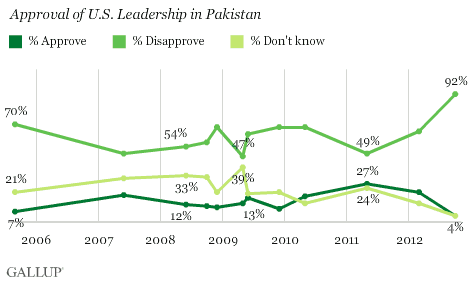
According to a new Gallup poll, more than nine out of ten Pakistanis (92%) disapprove of US leadership. Only 4% approve, “the lowest approval rating Pakistanis have ever given.”
Which of the 92% of Pakistanis that disapprove of US leadership does Brennan believe are “welcoming” of the drone war?
The reality is that this disapproval rating is largely a result of the fact that Washington has been bombing their country for about 10 years, with up to 364 strikes and 3,000 people killed.
A study last year by researchers at the Stanford and NYU schools of law found that the drone program is “terrorizing” the people of Pakistan and that it is having “counterproductive” effects in the population.
“Evidence suggests that US strikes have facilitated recruitment to violent non-state armed groups, and motivated further violent attacks,” the study said. “As the New York Times has reported, ‘drones have replaced Guantánamo as the recruiting tool of choice for militants.’ Drone strikes have also soured many Pakistanis on cooperation with the US and undermined US-Pakistani relations. One major study shows that 74% of Pakistanis now consider the US an enemy.”
This goes not just for Pakistan, but for Yemen too. According to The Washington Post, drone strikes are not “welcomed” by the population, as Brennan claims, but serve to radicalize the population against America.
“The evidence of radicalization emerged in more than 20 interviews with tribal leaders, victims’ relatives, human rights activists and officials from four provinces in southern Yemen where U.S. strikes have targeted suspected militants,” the Post reported. “They described a strong shift in sentiment toward militants affiliated with the transnational network’s most active wing, al-Qaeda in the Arabian Peninsula, or AQAP.”
“We have gone a long way down the road of creating a situation where we are creating more enemies than we are removing from the battlefield. We are already there with regards to Pakistan and Afghanistan,” said Robert Grenier, who headed the CIA’s counter-terrorism center and was previously a CIA station chief in Pakistan.
Brennan is living in a fantasy land.
and.....
http://news.antiwar.com/2013/02/14/at-funeral-for-iran-general-questions-grow-over-his-death-in-syria/
At Funeral for Iran General, Questions Grow Over His Death in Syria
Syrian Rebels Say Gen. Shateri Died in Israeli Air Strike
by Jason Ditz, February 14, 2013
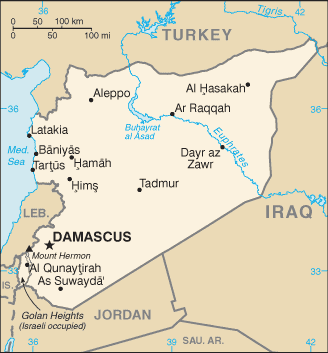
The death of Iranian Revolutionary Guards commander Gen. Hassan Shateri is sparking growing speculation, after initial reports of his death in Lebanon were changed to a death in Syria, and officials now say he was killed by “mercenaries and supports of Israel.”
With Shateri being mourned today in Tehran after a death officials say happened Tuesday, the rebel Free Syrian Army (FSA) is issuing a statement not only contradicting the timing, but the entire narrative.
According to an FSA spokesman, Gen. Shateri was killed two weeks ago in the Israeli air strikesagainst Syria. The spokesman also claimed the general was supervising shipments of regime arms to Lebanon.
Israeli officials have yet to comment on this claim, but have also been mostly mum on the strikes themselves. It is clear that the FSA would want to implicate Israel as this would both forward the effort to sell Israel on the idea of arms smuggling and give a boost to the chances of widening the war to other countries.
and......
Obama: Libya Still Poses ‘Extraordinary Threat’ to US Interests
Even After Imposing Regime Change, US Keeps Emergency Measures in Place
by Jason Ditz, February 14, 2013
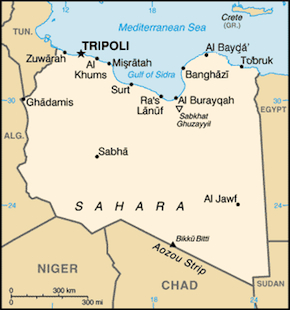
President Obama has issued another statement today reiterating his decision that the nation of Libya “poses an unusual and extraordinary threat to the national security and foreign policy of the United States.”
The statement was an extension of the “emergency” situation the Obama Administration has imposed on Libyasince February 2011. Today’s statement extends this emergency for yet another year.
The emergency was initially put into place in response to the Libyan civil war, which ended later in 2011 with a NATO-imposed regime change. Even after installing a pro-NATO government almost a year and a half ago, the “emergency” endures.
This is perhaps unsurprising with the US still reeling from the 9/11 attack on the US Consulate in Benghazi, which killed the American ambassador. Yet the idea that this is an “unusual” threat seems harder and harder to justify with Libya looking to be a long-term trainwreck in the wake of the civil war.
and......
http://news.antiwar.com/2013/02/14/counter-insurgency-bogging-down-french-troops-in-mali/
Counter-Insurgency Bogging Down French Troops in Mali
Troops Struggling to Shore Up Defenses in Gao
by Jason Ditz, February 14, 2013
A bloody weekend in the central Malian city of Gao, which saw multiple suicidebombings and a canoe-borne ambush by rebel fighters, has forced a major rethink for French troops who were just rushing from city to city leaving junta forces behind.
Since then, French troops have been bogged down in Gao, shoring up defenses and preparing for future ambushes and insurgent attacks, something which seems guaranteed to be a long-term issue.
Officials are downplaying the seriousness of the issue at the moment, insisting there are only minor pockets of resistance to be flushed out. Yet the sheer size of Mali and the amount of desert for rebels to hide in means that flushing is no easy task.
Indeed, the Gao clashes are typical of the ethnic tensions that will be fueling this war over the long run, with locals blaming a nearby village of a different ethnicity for housing the rebels, and urging French troops to attack that village as a way of securing the city. With French officials looking for the easy way out, they may eventually do so, but such an attack will add to resentment of the invaders’ decision to install the junta across the nation.
and......
http://www.thenational.ae/news/world/middle-east/turkey-builds-closer-oil-links-with-kurds-angering-us

Turkey builds closer oil links with Kurds, angering US
ISTANBUL // Turkey is pushing ahead with plans to extend economic cooperation with Iraq's Kurdistan region, brushing aside warnings from the United States that this approach could lead to the disintegration of the Iraqi state.
Iraq's Kurdish region had become so important to Turkey, economically and politically, that Ankara was willing to risk tensions with the US, its most important ally, said Celalettin Yavuz, an analyst at a think tank in the Turkish capital.
Taner Yildiz, Turkey's energy minister, yesterday said that oil imports from northern Iraq to Turkey by truck had resumed after a pause of several weeks for technical reasons.
He said Turkey was determined to sell refined-oil products to Iraqi Kurdistan, the state-run Amnadolu news agency reported.
Oil exports from northern Iraq to Turkey have angered the central-Iraqi government. It said the trade was illegal, which Ankara denies.
Mr Yildiz stressed that Turkey was also buying oil from southern Iraq, because doing otherwise would be "discrimination".
US officials are concerned that Turkey's strained ties with Baghdad could have implications for the rest of the region.
The Kurdish Regional Government (KRG) in northern Iraq said last week it planned to press ahead with building an oil-export pipeline to Turkey. "We want to have an oil pipeline to ourselves," said Ashti Hawrami, the Iraqi Kurdish minister for natural resources.
Crude from the Kurdistan region used to be shipped to world markets through a Baghdad-controlled pipeline to Turkey, but exports via that channel dried up in December, from a peak of around 200,000 barrels per day (bpd), due to a row with Baghdad over payments.
Recep Tayyip Erdogan, the Turkish prime minister, said his country was not obliged to wait for a new agreement between the central Iraqi government and the KRG over oil exploration and export rights, even though Washington wanted Ankara to be cautious.
"Our economic relations are getting broader, despite everything, including America," Mr Erdogan said last week, referring to the KRG.
Mr Erdogan, who has been careful to develop close relations with the US, freely acknowledged tensions with Washington over the issue.
"America says: 'What you are doing is wrong,'" Mr Erdogan said. "We are saying: 'No, Iraq's constitution allows it.'"
The present constitution, drawn up after the US-led invasion in 2003, gave Iraqi Kurds the right to more than 18 per cent of the country's oil reserves, he added.
Mr Erdogan's remarks followed a public warning by Francis Ricciardone, the US ambassador to Ankara. Speaking on February 5, he said a failure by Turkey and the central Iraqi government to deepen their cooperation would be dangerous for the whole region.
"There could be more violent conflict in Iraq and the forces of disintegration within Iraq could be emboldened," he said.
Mr Yavuz, the deputy director of the Turkish Centre of International Relations and Strategic Analysis, said the KRG was a priority for Turkey despite US concerns.
On the political front, Ankara was trying to secure the support of the KRG for efforts to end the Kurdish conflict in Turkey, he added.
The Turkish intelligence service had been negotiating with Abdullah Ocalan, the jailed leader of the Kurdistan Workers' Party, a rebel group that has been fighting Ankara since 1984.
"The KRG is indispensable for Turkey," Mr Yavuz said.
That outlook collides with US interests in the region. "The USA wants to secure the Gulf and keep Iran out," he added.
He said Iraq was drifting towards Iran, despite the US launching the 2003 invasion that had toppled Saddam Hussein, claimed the lives of several thousand US soldiers, cost trillions of dollars and battered America's image in the region.
"So one may ask: why did they go into Iraq in the first place?" said Mr Tavuz. "This is what makes the US concerned. By turning away from Turkey, Iraq is turning away from the West and towards Iran."
About 90 per cent of Turkish exports to Iraq went to the Kurdish region, he said. KRG oil and gas could help to reduce Turkey's dependence on energy imports from Iran and Russia.
The oil-exports row has also heightened existing tensions between Mr Erdogan's government and Iraq's prime minister, Nouri Al Maliki.
Turkey has accused Mr Al Maliki, a Shiite, of trying to centralise power in his hands, while Mr Al Maliki has said predominantly Sunni Turkey was meddling in Iraq's internal affairs and was a "hostile state".


No comments:
Post a Comment