http://www.debka.com/article/22209/Big-Russian-fleet-nears-Syria-Iran-to-fight-regime-change-as-foreign-forces-pile-up

http://news.antiwar.com/2012/07/24/syrian-rebels-now-using-ieds-like-in-afghan-quagmire/
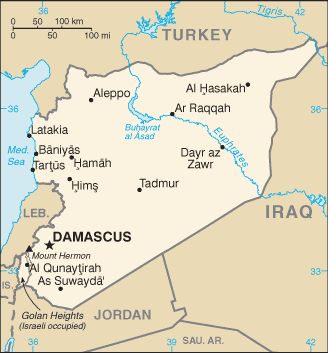 “Presents for Bashar al-Assad, we are holding a party for him here and in Aleppo,” one rebel fighter planting the bombs told The Independent. “It will be like the party in Damascus, lots of fireworks.”
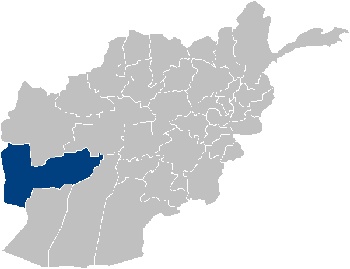 On the way out the commander, identified in reports only as Mirwais, apparently poisoned seven other police who refused to defect with him. They are still recovering in Farah hospital in the capital.
 – 20 hrs ago
Big Russian fleet nears Syria. Iran to fight regime change as foreign forces pile up
DEBKAfile Special Report July 25, 2012, 1:31 PM (GMT+02:00)
Russian Admiral Chabanenko warship
Russian, Western and Arab forces were piling up on Syrian borders Wednesday, July 25, bringing closer a war confrontation which could spur the Assad regime into making good on its threat to use chemical weapons against “external aggression.”
Based on this reading, Moscow added its voice Tuesday to that of US President Obama and warned Bashar Assad against using chemical weapons in view of “its commitments under the international convention it ratified prohibiting the use of poisonous gases as a method of warfare.”
DEBKAfile’s military sources: With operational intelligence deployment and electronic stations positioned inside Syria, the Russians are better placed than any other outsiders to know what is happening on Syria’s battlefields. Their warning must therefore be tied to solid information confirming Washington’s assessment that Assad is dangerously close to deciding to use his chemical and biological weapons in a way that would precipitate a regional conflict.
Israel, Turkey and Jordan would be the first targets on his list.
The immediacy of the peril, DEBKAfile’s military sources report, has speeded the arrival of Russian warships to Syria to counter a potential Western, Arab or Israeli assault on the embattled country.
The Russian Ministry of Defense, which rarely discloses Russian military movements outside its borders, announced early Wednesday morning, July 25 that a fleet of Russian warships had passed through the Strait of Gibraltar and entered the Mediterranean.
Based on this reading, Moscow added its voice Tuesday to that of US President Obama and warned Bashar Assad against using chemical weapons in view of “its commitments under the international convention it ratified prohibiting the use of poisonous gases as a method of warfare.”
DEBKAfile’s military sources: With operational intelligence deployment and electronic stations positioned inside Syria, the Russians are better placed than any other outsiders to know what is happening on Syria’s battlefields. Their warning must therefore be tied to solid information confirming Washington’s assessment that Assad is dangerously close to deciding to use his chemical and biological weapons in a way that would precipitate a regional conflict.
Israel, Turkey and Jordan would be the first targets on his list.
The immediacy of the peril, DEBKAfile’s military sources report, has speeded the arrival of Russian warships to Syria to counter a potential Western, Arab or Israeli assault on the embattled country.
The Russian Ministry of Defense, which rarely discloses Russian military movements outside its borders, announced early Wednesday morning, July 25 that a fleet of Russian warships had passed through the Strait of Gibraltar and entered the Mediterranean.
The fleet is headed by the anti-submarine and anti-aircraft Admiral Chabanenko warship and consists of another three vessels carrying a large number of Russian marines. This fleet will rendezvous with a Russian flotilla standing by in the Mediterranean since July 21, detached from Russian Black Fleet and composed of the Smetlivy figate and two large landing craft loaded with Russian marines. This group awaited the main force before approaching Syria.
The fact that Russia is massing large numbers of marines off the Syrian coast looks as though a landing on Syrian soil is on Moscow’s cards.
The Russian marine contingent, DEBKAfile’s sources say, will stand ready - either to come to the aid of the Assad regime or to serve as a bargaining chip for a last-minute deal between Moscow and Washington for ending the war by establishing a transitional military regime in Damascus whose makeup would be agreed between them and Assad.
The fact that Russia is massing large numbers of marines off the Syrian coast looks as though a landing on Syrian soil is on Moscow’s cards.
The Russian marine contingent, DEBKAfile’s sources say, will stand ready - either to come to the aid of the Assad regime or to serve as a bargaining chip for a last-minute deal between Moscow and Washington for ending the war by establishing a transitional military regime in Damascus whose makeup would be agreed between them and Assad.
US Secretary of State Hillary Clinton hinted at this possibility on Tuesday, July 24, when she said: “We do believe that it is not too late for the Assad regime to commence with planning for a transition.”
But Clinton also hinted, in a more threatening tone, that a situation is developing for the creation of safe zones in rebel-controlled areas of Syria. “More and more territory is being taken and it will, eventually, result in a safe haven inside Syria which will then provide a base for further actions by the opposition,” she said.
Clinton didn’t name the potential protectors of those havens. However, since the Syrian rebels are short of manpower, Western, Muslim or Arab defenders would have to be called in.
Wednesday, British military sources in London sad the moment is rushing forward for British forces to get involved in what is happening in Syria. Iran and Turkey are not indifferent either.
Wednesday, British military sources in London sad the moment is rushing forward for British forces to get involved in what is happening in Syria. Iran and Turkey are not indifferent either.
Deputy Iranian Revolutionary Guard chief, Gen. Masoud Jazayeri, warned on Tuesday, July 24, that Tehran would not permit regime change in Damascus and if Syria’s enemies intervened, Iran would hit them hard. The Iranian commander pointed a finger at Saudi Arabia and Qatar, adding that the US and Israel are at the forefront of the comprehensive campaign against Syria but are being beaten back.
This was the first time Tehran had explicitly threatened military intervention in Syria.
This was the first time Tehran had explicitly threatened military intervention in Syria.
Wednesday, Turkey shut its border crossings to Syria. Military sources in Ankara confirmed that massive Turkish military strength had been on the move toward the Syrian border.
and....
http://news.antiwar.com/2012/07/24/syrian-rebels-now-using-ieds-like-in-afghan-quagmire/
Like Afghan Counterparts, Syrian Rebels Now Using IEDs
IEDs are inherently indiscriminate weapons, yet Washington continues to support these rebel militias
by John Glaser, July 24, 2012
The Syrian rebel militias have learned how to make improvised explosive devices and plan to make them a primary tool in the increasingly guerrilla-style war against the regime of Bashar al-Assad.
“Presents for Bashar al-Assad, we are holding a party for him here and in Aleppo,” one rebel fighter planting the bombs told The Independent. “It will be like the party in Damascus, lots of fireworks.”
The resiliency and effectiveness of the insurgency in Afghanistan rested in large part on their use of IEDs. They have been one of the foremost causes of death for NATO troops and civilians and their use in Syria is in its infancy, but shows just how much more deadly and protracted this conflict can get.
It is known that the Syrian opposition has at least some ties to al-Qaeda and that rebel militias have committed serious crimes, but the introduction of IEDs into the conflict blurs the lines that much more between these fighters and those Washington considers its mortal terrorist enemies in Afghanistan.
IEDs are, by their nature, indiscriminate weapons. Most of the ones in the hands of Syrian rebels, according to The Independent, are home-made, but the US and its allies continue to send both lethal and non-lethal aid to these rebels, despite their use of IEDs and despite not knowing who it is that is even receiving this aid.
The Obama administration has officially “abandoned efforts for a diplomatic settlement” in favor of “increasing aid to the rebels and redoubling efforts” at regime change, according to the New York Times. Many interventionist voices in Washington claim that such increased support will stem the violence, but the rebels’ resort to this kind of guerrilla warfare illustrate just how much more violent and extended this increasingly sectarian conflict can get.
And speaking of Afghanistan , taliban scores a pr victory ( along with large quanities of vehicles and weaponry ) with defections by a Afghan Police Commander along with 12 officers - I assume these are US tax dollar trained Police officials .....
Afghan Police Commander, 12 Other Officers Defect to Taliban
Afghan Govt. Denies Claims Two Members of Peace Council Also Defected
by Jason Ditz, July 24, 2012
Farah Province officials are expressing serious concern today after the police commander from Bala Boluk District defected to the Taliban, taking 12 other police officers and a large quantity of weaponry and military vehicles with him.
On the way out the commander, identified in reports only as Mirwais, apparently poisoned seven other police who refused to defect with him. They are still recovering in Farah hospital in the capital.
Defections are not unheard of, but in the past Afghan officials have insisted they were “infiltrators” when they joined in the first place. They are calling this defection the “first” time a large group left with so many weapons.
But officials are denying other report that two members of the Afghan High Peace Council had also defected to the Taliban. In this case the defectors were not named.
And Iraq bans Chevron from oil contracts with the Central government ( like Exxon , Chevron continues to strike deals with the Kurds ) ..... how long before the Kurds secede , how much longer does PM Maliki have ?
Iraq blacklists Chevron over oil deal with Kurds
– 20 hrs ago
BAGHDAD (AP) — Iraq says it has blacklisted the U.S. oil giant Chevron Corp. from signing future oil deals in the country's center and south after it secured an agreement with the northern Kurdish self-rule region in defiance of Baghdad.
On Thursday, the California-based company said it had taken over India's Reliance's 80 percent share to explore for oil in two blocks in the north. Chevron has no deals with Baghdad.
The Kurds have been at loggerheads with the Arab-led government over who has the final say in developing oil and gas resources. Baghdad wants to manage its energy resources nationwide, but the Kurds say the constitution does not require them to go through Baghdad.
Tuesday's Oil Ministry statement says Chevron can sign deals only when it terminates work with the Kurds.
and further Iraq news .....
| Iraq blasts kill Kurdish security officials | |
Explosions in a town north of Baghdad has killed six members of Kurdish intelligence forces, and wounded three others.
Last Modified: 25 Jul 2012 01:44
| |

The twin blasts come a day after at least 107 people were killed in bomb and gun attacks across Iraq [Reuters]
| |
| A twin blast has killed six members of the Kurdish intelligence forces known as the Asayish and wounded three others in a town north of the capital Baghdad, hospital and police sources said. The first bomb was planted outside a house of a member of the Asayish in Tuz Khurmatu, Salahuddin province, 170km north of Baghdad.
When Asayish members arrived at the scene to evacuate the wounded, a bomb-rigged motorised cart then exploded.
Three civilians were also wounded in the attack, sources said on Tuesday. At least 107 people were killed in bomb and gun attacks in Iraq on Monday, a day after 20 died in explosions, in a co-ordinated surge of violence against mostly Shia Muslim targets. The bloodshed, which coincided with an intensifying of the conflict in neighbouring Syria, pointed out deficiencies of the Iraqi security forces, which failed to prevent fighters from striking in multiple locations across the country. As well as the scores of deaths, at least 268 people were wounded by bombings and shootings in Shia majority areas of Baghdad, the Shia town of Taji to the north, the northern cities of Kirkuk and Mosul and many other places, hospital and police sources said, making it one of Iraq's bloodiest days in weeks. Sectarian violence surged in 2006-2007 but deadly attacks have persisted while political tensions among Iraq's main Shia, Sunni and Kurdish factions have increased since US troops completed their withdrawal in December. Chevron blacklisted Meanwhile, the Iraqi government has blacklisted Chevron Corp over its new deal with the semi-autonomous Kurdish region. "In line with Oil Ministry policy based on the constitution, the Oil Ministry announces the disqualification of Chevron company and bars it from signing any deals with the federal Oil Ministry and its companies," the oil ministry said in a statement on Tuesday. Baghdad says deals made with the Kurdistan Regional Government are illegal. Iraq banned Exxon Mobil from an oil exploration operation in May because it had signed a deal with the Kurds last year.
|


No comments:
Post a Comment