http://www.debka.com/article/21941/
US bid to defuse Egyptian-Israeli tensions derailed by Egyptian Islamists
DEBKAfile Special Report April 24, 2012, 8:11 PM (GMT+02:00)

http://news.yahoo.com/egypt-offers-sell-gas-israel-price-153544189.html
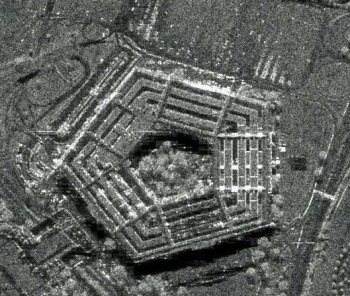 Afghan President Hamid Karzai had initially demanded a minimum of $2 billion per year in guaranteed funding for the pact to go through. US officials have said they plan to spend considerably more than that but didn’t want it in writing.
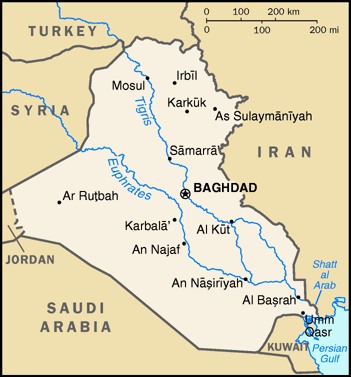 Barzani’s comments expressed hope that the KRG’s close relationship with US oil giant ExxonMobil would afford some protection from attempts to undermine its autonomy, and warned against a coming military confrontation.
US bid to defuse Egyptian-Israeli tensions derailed by Egyptian Islamists
DEBKAfile Special Report April 24, 2012, 8:11 PM (GMT+02:00)

Egyptian tanks in Sinai
Monday night, April 24, the Obama administration stepped in to damp down the military frictions developing between Jerusalem and Cairo, which were fanned further this week by a dispute over the suspension of Egyptian gas to Israel. Earlier that day, the Chairman of Egypt’s Supreme Military Council, SCAF, Field Marshal Muhammad Tantawi said: “If anyone comes near Egypt’s border, we will break their leg.” Egypt’s Second Army chief, Gen. Muhammad Higazi added: “Aggressors should reconsider before thinking of attacking any part of Egyptian territory.”
Their remarks, delivered during a live fire exercise, Nasr 7, conducted by the Second Egyptian Army in Sinai, were clearly addressed to Israel and the IDF. In Washington,DEBKAfile’s sources report that President Barack Obama, Defense Secretary Leon Panetta and Secretary of State Hillary Clinton were warned by their military and intelligence analysts that a military clash between Egypt and Israel was hovering on the brink. There were two potential triggers: The gas issue which suddenly surfaced this week and advance warnings that Sinai Bedouin, Palestinian extremists - some from Gaza, and al Qaeda gangs were plotting terrorist attacks and protest acts for Israel’s 64th Independence Day this Thursday, April 26.Their object: to whip up a storm to blow up the 1979 Egyptian-Israel peace accords.
Their plans entail sending terrorists across the Egyptian Sinai border for attacks on Israelis to generate Israeli military incursions into Egyptian territory in hot pursuit of the perpetrators.
This almost happened on April 5, after a Palestinian Popular Resistance Committees gang fired two Grad missiles at Eilat from Sinai. The IDF was about to sent a small special force across into Sinai for the first time since the peace pacts were signed 33 years ago to waylay the missile team as it headed back to the Gaza Strip. Netanyahu and Barak vetoed the incursion.
Wednesday, the US bid to temper tension was abruptly overturned.
Section 8 of the peace accords strictly bind Egypt to maintain and honor the war memorials for the Israelis who fell in battle in Sinai. On Israel’s Memorial Day for fallen soldiers on the eve of its 64th independence day, Egyptian Islamists and Bedouin groups announced they would advance en masse on the Israeli memorials, erase the Israeli names of Israeli soldiers and fill in the names of Egyptian fallen men.
They are counting on Egyptian military and security forces, which have pretty much lost control of the situation there, failing to guard the Israeli sites and hope by their deep affront to Israel to plunge relations into deep crisis.
That said, Israel too must share some of the blame for the rising tensions this week, most particularly, remarks made by Foreign Minister Avigdor Lieberman.
In an interview he gave Monday, April 23 during an official visit to Baku, Azerbaijan, Lieberman declined to repudiate his previous remark that the threat to Israel coming from Egypt was even graver than the threat from Iran.
Nor did the minister confirm or deny reports that the Foreign Ministry had handed Prime Minister Netanyahu a working paper recommending the reconstitution of the pre-peace pact’s Southern Army and deploy its seven divisions on the Egyptian border - as they were during the decades when the two countries were at war.
Only one IDF combat divisions currently guards the border. It too was only posted there after terrorists crossed in from Sinai on Aug. 26, 2011, attacked Eilat highway traffic and murdered eight Israelis.
Chief of Staff Lt. Benny Gantz commented at the time that the border with Egypt was no longer a frontier of peace but of menace.
That said, Israel too must share some of the blame for the rising tensions this week, most particularly, remarks made by Foreign Minister Avigdor Lieberman.
In an interview he gave Monday, April 23 during an official visit to Baku, Azerbaijan, Lieberman declined to repudiate his previous remark that the threat to Israel coming from Egypt was even graver than the threat from Iran.
Nor did the minister confirm or deny reports that the Foreign Ministry had handed Prime Minister Netanyahu a working paper recommending the reconstitution of the pre-peace pact’s Southern Army and deploy its seven divisions on the Egyptian border - as they were during the decades when the two countries were at war.
Only one IDF combat divisions currently guards the border. It too was only posted there after terrorists crossed in from Sinai on Aug. 26, 2011, attacked Eilat highway traffic and murdered eight Israelis.
Chief of Staff Lt. Benny Gantz commented at the time that the border with Egypt was no longer a frontier of peace but of menace.
On Tuesday, April 24, Prime Minister Benjamin Netanyahu said in a radio interview ahead of Independence Day that the Sinai had degenerated into a Wild West land rife with Iranian-aided gangs who smuggled arms and attacked Israel. He expressed hope that the next Egyptian president, whomsoever is elected, will opt for upholding the peace pact with Israel because it is in the interests of both countries.
The strains between Cairo and Jerusalem were further exacerbated this week by the misreporting by Israel media of a dispute concerning the flow of Egyptian gas to Israel. It was falsely presented as affecting the peace accords, when in fact the flow was suspended over a court case airing in Egypt between conflicting business interests and repeated sabotaqe.
The strains between Cairo and Jerusalem were further exacerbated this week by the misreporting by Israel media of a dispute concerning the flow of Egyptian gas to Israel. It was falsely presented as affecting the peace accords, when in fact the flow was suspended over a court case airing in Egypt between conflicting business interests and repeated sabotaqe.
As the political rhetoric heated up in both Cairo and Jerusalem, a dose of balm was administered from Washington in both capitals. The Egyptian ambassador in Tel Aviv formally stated that the disagreement was commercial, certainly not political. And the defense ministry’s diplomatic coordinator Amos Gilad was dispatched to Cairo to persuade Egypt’s intelligence chief Murad Mowafi to join forces for calming the upset.
The next 48 hours will be critical.
and.....
http://news.yahoo.com/egypt-offers-sell-gas-israel-price-153544189.html
A senior Egyptian minister said on Monday her country is ready to resume gas exports to Israel but at a new price, after scrapping a long-term contract.
International Cooperation Minister "Fayza Abul Naga said the Egyptian side had no objections to reaching a new contract with new conditions and a new price," the official MENA news agency reported.
Egypt annulled the contract last Thursday, saying Israel had not met the conditions of a gas export accord signed in 2005. Egypt supplies roughly 40 percent of Israel's gas supplies.
Abul Naga said Israel had been notified five times that it was not meeting its financial obligations under the old contract.
Cairo's Islamist parliament hailed the contract's cancellation, saying it "salutes the decision to stop exporting gas to the Zionist entity" in a statement read out by the speaker, Saad al-Katatni.
The decision "reflected the will of all Egyptians," the statement said.
Egypt's electricity and fuel minister, Hassan Yunis, said earlier that the natural gas being exported to Israel under the controversial 15-year deal would instead be used domestically.
"The gas that used to be exported to Israel will be directed to Egyptian electricity plants, as we have more right to it," he told reporters.
The gas contract with Israel, which signed a peace treaty with Egypt in 1979, was the largest trade deal between the two former foes and has always been controversial in the Arab world's most populous country.
Bedouin militants have bombed the gas pipeline -- which also supplies Jordan -- in Egypt's Sinai Peninsula 14 times since a popular uprising ousted president Hosni Mubarak in February 2011.
Mubarak now faces corruption charges, along with murder charges in a trial, over the gas contract, which critics said allowed Israel to buy gas at a low price and profited corrupt officials.
Israel downplayed the political significance of the cancellation on Monday, calling it a "commercial dispute" with no impact on diplomatic relations with Egypt.
"We don't see this cutoff of the gas as something that is born out of political developments," Prime Minister Benjamin Netanyahu told a meeting of heads of the Israel Bonds fundraising organisation.
"It's actually a business dispute between the Israeli company and the Egyptian company," his office quoted him as saying.
A spokesman for Netanyahu insisted the agreement was still intact on Sunday.
"The gas supply deal between Israel and Egypt has not been cancelled. There is a legal dispute between Israeli and Egyptian companies," said spokesman Ofir Gendelman in a message posted on Twitter.
Exports to Israel were launched in 2008, three years after the accord which came in for heavy criticism at the time from Egypt's then banned Muslim Brotherhood.
Egypt's parliament, now dominated by the Brotherhood, and ruling military cabinet have sought to be more assertive towards Israel, distancing themselves from Mubarak's close ties with the Jewish state.
Last year, protesters ransacked the reception area of the Israeli embassy, forcing its closure. Israel has since been unable to find new grounds for a mission in Cairo.
Jordan said on Monday that cut-offs in Egyptian gas supplies because of the pipeline attacks could cost it more than $2 billion this year.
Gas supplies from Egypt plunged from 300 million cubic metres a day in 2009 to 78 million cubic metres in 2011, said Jordan's Electricity Regulatory Commission head Ahmad Hyasat.
and....
http://news.antiwar.com/2012/04/23/pentagon-no-funding-guarantees-in-2024-afghan-deal/
Pentagon: No Funding Guarantees in 2024 Afghan Deal
Military 'Pleased' by Negotiations
by Jason Ditz, April 23, 2012
Though the overall terms of the agreement remain a closely guarded secret, the Pentagon today confirmed that the deal that will keep US troops in Afghanistan through 2024 does not include any guarantees of specific funding for Afghan forces.
Afghan President Hamid Karzai had initially demanded a minimum of $2 billion per year in guaranteed funding for the pact to go through. US officials have said they plan to spend considerably more than that but didn’t want it in writing.
The reason for that is clear and administration officials have been upfront about it. Any financial pledges would make the deal to commit to another decade of occupation subject to Congressional oversight, and the administration had no interest in bringing the deal before Congress for a vote, particularly with the war so overwhelmingly unpopular.
Pentagon spokesman Capt. John Kirby said the military was “pleased” by how quickly the negotiations had advanced, but said no details about what actually did make it into the document could be released.
and...
Kurdistan President: Maliki Must Not Obtain F-16s
US-Made Warplanes Would Be Used Against Kurds, Barzani Says
by Jason Ditz, April 23, 2012
Relations between Iraq’s Kurdistan Regional Government (KRG) and Prime Minister Nouri al-Maliki continued to worsen today, as KRG President Massud Barzanidelivered a high profile speech in Arbil today about the threats posed by Maliki’s government.
Barzani’s comments expressed hope that the KRG’s close relationship with US oil giant ExxonMobil would afford some protection from attempts to undermine its autonomy, and warned against a coming military confrontation.
To that end, Barzani warned that Maliki’s government should not be allowed to purchase US-made F-16 warplanes, saying he is convinced that they would be used against the Kurdish north by Maliki, who is increasingly centralizing power under his control.
Barzani has discussed the F-16 purchases in the past, saying he believes that the only reason Maliki hasn’t invaded KRG territory yet is because of the relative parity between the Iraqi military and the Peshmearga, and warning that the F-16s could tip the balance overwhelmingly in favor of Maliki’s forces.
Barzani has been increasingly vocal in his criticism of Maliki, who is currently the Prime Minister as well as the acting Interior Minister, Defense Minister, National Security Minister, and Chief of Military Staff. A recent visit to Turkey had Barzani discussing the situation with Turkish PM Erdogan, leading Maliki to declare Turkey an “enemy state.”


No comments:
Post a Comment