http://news.antiwar.com/2012/03/07/stratfor-emails-covert-special-ops-inside-syria-since-december/
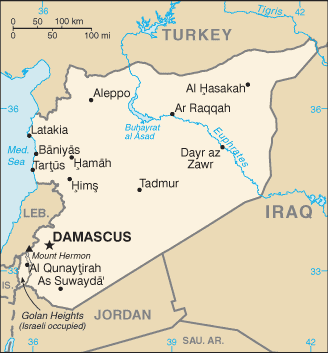 An analyst from Stratfor claimed in December 2011 that officials at the Pentagon clued him in on covert military operations taking place in Syria. “After a couple hours of talking, they said without saying that SOF [Special Operations Forces] teams (presumably from US, UK, France, Jordan, Turkey) are already on the ground focused on recce [reconnaissance] missions and training opposition forces,” the email said.
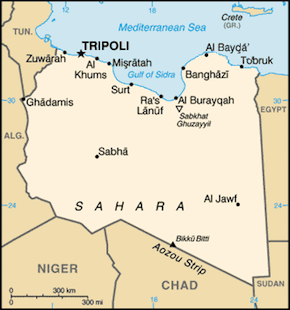 Jalil’s announcement is a harsh response to yesterday’s announcement by a number of local leaders that they are planning to make Benghazi and the surrounding area a “semi-autonomous region” within Libya.
Stratfor Emails: Covert Special Ops Inside Syria Since December
A private conversation with Pentagon officials suggested US and allied troops were on the ground in Syria
by John Glaser, March 07, 2012
Special operations forces from the U.S. and its allies have been on the ground in Syria since at least December, according to confidential emails from the private intelligence firm Stratfor that were released by WikiLeaks.
An analyst from Stratfor claimed in December 2011 that officials at the Pentagon clued him in on covert military operations taking place in Syria. “After a couple hours of talking, they said without saying that SOF [Special Operations Forces] teams (presumably from US, UK, France, Jordan, Turkey) are already on the ground focused on recce [reconnaissance] missions and training opposition forces,” the email said.“One Air Force intel guy (US) said very carefully that there isn’t much of a Free Syrian Army to train right now anyway, but all the operations being done now are being done out of ‘prudence,’” it continued. “They have been told to prepare contingencies and be ready to act within 2-3 months, but they still stress that this is all being done as contingency planning, not as a move toward escalation.”
Publicly, the Obama administration has retreated from its initial refusal to stay out of the conflict in Syria by agreeing this week to provide direct humanitarian and communications assistance to the Syrian opposition. While the official line remains to keep military options off the table for now, the change in policy could open the flood gates for expanded military intervention.
Complicating the official story, a report coming out of Lebanon this week claimed 13 French soldiers were captured in the Syrian city of Homs. The French Foreign Ministry denied the claims, saying there are no ground troops in Syria.
According to the Stratfor analyst, after rejecting the prospect of “an eventual air campaign,” the officials at the Pentagon told him “the idea ‘hypothetically’ is to commit guerrilla attacks, assassination campaigns, try to break the back of the Alawite forces, elicit collapse from within.”
The extent to which the information exchanged in the conversation was “hypothetical” is not clear and no U.S. official has made any comment on the information in the leaked email. The discussion appeared focused on contingency planning and the phrase “they said without saying” is never elaborated on. The date of the email coincides roughly with the first public reports of secret contingency planing in December.
Information in a report on Stratfor’s website published March 7, 2012, appears to have been taken at least partially from this very email. It reads: “The U.S. military indeed has updated its order of battle for Syria in preparation for any contingency operations, and this work allegedly produced the best order of battle the United States has had on Syria since 2001. However, contingency plans exist for numerous countries with which war is unlikely.”
In congressional sessions with top military officials on Wednesday, some in Congressexpressed frustration with current policy, as articulated by Defense Secretary Leon Panetta and others. “I get irritated, I get angry,” McCain insisted, accusing the U.S. military of “standing on the sidelines” instead of waging an all out war on Syria, as he proposed on Monday.
and.....
Libyan NTC Ruler Vows to Unite Country ‘By Force’
Warns Benghazi Against Trying to Establish Semi-Autonomous Region
by Jason Ditz, March 07, 2012
The next Libyan civil war looks set to begin at any time now, and as with the 2011 version, it looks like Benghazi will be the first battleground, as NTC chairman Mustafa Jalil today announced his determination to unite the country “with force.”
Jalil’s announcement is a harsh response to yesterday’s announcement by a number of local leaders that they are planning to make Benghazi and the surrounding area a “semi-autonomous region” within Libya.The move to create the region reflects growing annoyance at the NTC, NATO’s chosen rulers for the country after the 2011 war, both over the large number of Gadhafi loyalists integrated into the NTC and their apparent disinterest in holding elections.
Already Ahmed al-Zubair has been named as the head of the Benghazi region, and has promised to see it governed internally, deferring to the NTC only on matters of foreign policy. With Benghazi the center of Libya’s oil wealth, control once again will be hotly contested.
and...
http://www.ctpost.com/news/article/Suspicion-rises-between-Western-advisers-Afghans-3387639.php
KABUL, Afghanistan (AP) — "Shoulder to shoulder" is the mantra of the NATO-Afghan military partnership. Now, after Afghan soldiers and police turned their guns on their foreign partners during outrage over the Quran burnings, even Western advisers — not just combat troops — are looking over their shoulders.
The deepening distrust is jeopardizing the U.S.-led coalition's strategy of training Afghan security forces and helping government workers so that international troops can go home.
The advisers do a variety of jobs. While some focus on the battlefield, others pore over geological surveys, lure outside investors or make sure that key mountain passes are clear of snow. They work closely with their Afghan counterparts to build a government strong enough to fend off threats and attacks from the Taliban and other militants trying to destabilize their country.
There has been lingering distrust for years. Afghan soldiers and police, or militants dressed in their uniforms, have shot and killed more than 75 U.S. and other coalition forces in Afghanistan since 2007.
But tensions soared Feb. 25 when two U.S. military advisers were found dead with gunshots to the back of the head inside the Afghan Ministry of Interior, one of the most heavily guarded buildings in the capital, Kabul.
The two were among six U.S. troops killed by Afghan security forces during a week of demonstrations over the burning of Islamic books and Qurans at a U.S. military base in eastern Afghanistan. President Barack Obama and U.S. military officials say the burnings were a mistake and not intentional.
On Tuesday, Obama said the retaliatory killings have given new credence to the need to end the war.
"I think that it is an indication of the challenges in that environment, and it's an indication that now is the time for us to transition," Obama said during a White House news conference.
Obama announced no speeding up of the NATO-backed plan to end combat missions in Afghanistan at the end of 2014, saying "that continues to be the plan." But the comments were also seen as a warning that President Hamid Karzai should stop delaying a partnership deal with the United States. Karzai has been increasingly intransigent on the deal after the Quran burnings.
Hours after the military advisers' bodies were found on the floor of their office, Gen. John Allen, the top commander of U.S. and NATO forces in Afghanistan, took the unprecedented step of recalling hundreds of coalition personnel working in more than two dozen government ministries in Kabul. He said the decision was made "for obvious force protection reasons." Britain, France, Germany and Canada quickly followed suit, putting much of the West's mentoring and advising work on hold.
"It's a declining relationship. It has been for years," said Martine van Bijlert, co-founder of the Afghan Analyst Network in Kabul. "You won't be able to fix that. The big question is 'Will it remain a workable relationship?' I think it's possible. It could settle down, but it won't fully settle down to the old level."
"These advisers are crucial, especially in the security sector when we're talking about transition," said Haroun Mir, director of Afghanistan's Center for Research and Policy Studies in Kabul. "Certainly the Afghan government can function without them, but if they don't return, it will take a toll on the financial situation of the government. Many of these projects financed by donors require the presence of these advisers."
Allen is determined to get the advisers back into the ministries as soon as possible — when he deems it is safe enough to do so, said U.S. Army Lt. Col. Jimmie Cummings, a coalition spokesman. The coalition has not disclosed the total number of advisers who work in the ministries.
Their work has not completely stopped, he said.
"Though they are not physically standing beside them, the advisers are still in daily communication with their Afghan counterparts, as Gen. Allen directed to keep the lines of communication open," Cummings said. "We are committed to our partnership with the government of Afghanistan. ... Tens of thousands of Afghan and coalition troops continue to effectively work together on significant missions every day."
A few dozen advisers critical to the mission have trickled back to work, but with additional security, Cummings said.
A senior Western adviser who oversees advisers in several ministries said that when they go back they probably will be required to wear body armor and travel in groups with armed escorts. The adviser said they also might have to get permission to visit the ministries, reducing day-to-day contact with their Afghan partners.
Some advisers, such as the ones involved in the Afghanistan-Pakistan Hands program, will balk at increased security, the adviser said. The U.S. established the program in September 2009 to create a team of military and civilian experts who could develop close working relationships with their Afghan and Pakistani counterparts.
Contractors who serve as advisers generally are not so eager to rush back to the ministries, and some told the adviser they are ready to head home.
The adviser and all others who spoke on condition of anonymity for this article did so because of increasing tensions in the NATO-Afghan relationship.
Restoring trust between Western advisers and their Afghan counterparts will be challenging.
"If an adviser gets killed and you're an adviser, it's going to be difficult," said Nadia Gerspacher, a senior program adviser for the United States Institute of Peace in Washington.
"Is it going to make people less trusting and feeling more insecure in the ministry? Probably," said Gerspacher, who has been in contact with advisers in Kabul since the killings.
An international security contractor said he could feel the tension when he visited an Interior Ministry office the day after the U.S. advisers were killed. Usually Afghan police there greet him with "Salamou Aleikom," meaning "Peace be with you." This time, 14 or 15 armed policemen standing in a hallway outside the office were silent, he said. The policemen asked an interpreter whether the Western contractor was American or British. He and a colleague soon left.
An Afghan National Police general at the Interior Ministry said he felt ashamed by the killings and would welcome the advisers back.
They are the teachers for Afghanistan's new system of providing security and if they don't return, the work being done to reform the unprofessional and corrupt policemen will collapse, said the general. A lot of work has been suspended since the killings, the general said.
Another official at the Interior Ministry said the Western advisers' morale had been shattered.
When two Western advisers visited his unit a few days ago, he tried to break the tension. Jokingly, he shook his finger at them, smiled and said: "You've been absent for four or five days. Your pay will be docked." He said that he has developed strong bonds with a few of the Western advisers and will consider them good friends forever.
Some ministries aren't so dependent on the advisers, according to an official at the Finance Ministry. He said the advisers were badly needed three or four years ago, but that the ministry was now staffed with talented, well-trained Afghan employees who no longer need the 20 to 25 well-paid Westerners who currently work there. The ministry could hire five Afghans with the salary paid to one Westerner, he said.


No comments:
Post a Comment