http://www.zerohedge.com/news/bondholder-betrayal-leaps-anew
 Submitted by Tyler Durden on 07/18/2012 08:15 -0400
and....
http://www.zerohedge.com/news/finland-enters-nirp-club-germany-sells-2-year-subzero-debt-first-time
Submitted by Tyler Durden on 07/18/2012 06:55 -0400

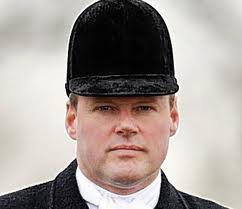 Hester….keeping things under his hat
http://www.ekathimerini.com/4dcgi/_w_articles_wsite1_20071_18/07/2012_452684
( Note that PM Samaras has been silent , letting Venizelos and Kouvelis do the talking for the Coalition of Fools )
Greece’s coalition leaders have agreed on some of the 11.5 billion euros of cuts being demanded by the country’s lenders and that no more additional fiscal measures would be needed this year.
Prime Minister Antonis Samaras held a meeting lasting almost four hours with PASOK leader Evangelos Venizelos and Democratic Left chief Fotis Kouvelis after Finance Minister Yannis Stournaras held two days of talks with ministers to discuss spending cuts.
Stournaras briefed the three leaders on where the savings would be made. Sources said that about 7.5 of the 11.5 billion euros have been identified.
After leaving the meeting, Stournaras said the leaders agreed on the cuts and talks would continue in order to pinpoint further savings.
Venizelos and Kouvelis made statements after their talks with Samaras and indicated that there had been broad agreement among the leaders.
The PASOK chief said they agreed that Greece would have to ask for an extension to its fiscal adjustment period, that a new mid-term fiscal plan would have to be drawn up to act as a basis for the 2013 budget and that structural reforms, including privatizations, would have to be speeded up.
Greece has to make 3 billion euros of savings by the end of the year, based on its agreement with the troika early this year. Venizelos said that no more fiscal measures would be taken beyond this, following rumors that another 2 billion euros of cuts were being demanded.
Venizelos added that the three leaders concurred that there should be no “horizontal measures,” in other words no across-the-board cuts or tax hikes, in the 2013/14 package.
The PASOK leader also seems to have succeeded in his attempt to convince his counterparts of the need to form a national negotiating team to deal with issues relating to the bailout. Venizelos said that a panel called the National Committee for Economic Planning would be formed to take on the matter.
In his brief statement, Kouvelis stressed that steps were being made to ease the impact on the country’s poorest families. He said that they would receive some kind of support when tax on heating oil is raised to match levies on other forms of fuel later this year.
 The decision to call a new meeting suggested the three leaders had yet to agree on the controversial cuts during talks held earlier on Wednesday.
Greece's finance minister on Wednesday said the crisis-hit country had "some way to go" to finalise 11.5 billion euros in spending cuts demanded by its EU-IMF creditors in return for fresh loans.
The decision to call a new meeting suggested the three leaders had yet to agree on the controversial cuts during talks held earlier on Wednesday.
Greece's finance minister on Wednesday said the crisis-hit country had "some way to go" to finalise 11.5 billion euros in spending cuts demanded by its EU-IMF creditors in return for fresh loans.
The basic principles that I apply — no solidarity without effort in return, no liability unless we can really exercise control — are shared by a large part [of the German population]. That encourages me to continue shaping Europe’s future based on these principles.
Of course, we haven’t yet shaped the European project in a way that we can be sure that everything will work, will turn out well. That means we have to keep working. Still, I’m optimistic that we will succeed.
We have construction mistakes of Economic and Monetary Union and it is time to correct them. It is clear that the core of the current debate has a name: further sharing of sovereignty.
The measures must be submitted for approval by July 24, when auditors of the so-called "troika" of the European Union, the International Monetary Fund and the European Central Bank are expected to return to Athens for a check-up mission.
Bondholder Betrayal Leaps Anew
From Mark Grant, author of Out Of The Box
Betrayal Leaps Anew
America is not virginal; I will start out with this statement as exemplified by what was done with General Motors and the ending of the dividends for the owners of the Freddie Mac and FNMA preferred shares. Fortunately Mr. Paulson is no longer in a position of power as his decision making process was seriously flawed in my opinion. However, having owned up to previous mistakes, the Rule of Law still generally functions in the United States and bankruptcy proceedings follow well documented procedures so that while America cannot claim perfection it can claim a record that is significantly better than Europe. I begin today’s discussion from this point as life is often a matter of degree and very few things are just black or white and the shades of grey is the vast area where most things make a difference. Then, having admitted the mistakes, I find what is transpiring in Europe to be of particular concern to bond holders.
“He that has eyes to see and ears to hear may convince himself that no mortal can keep a secret. If his lips are silent, he chatters with his fingertips; betrayal oozes out of him at every pore.”-Sigmund Freud
You may recall that the PSI (Private Sector Involvement) was a one-off event as heralded again and again in the Press by every political leader in the European Union. This proclamation was thundered from the rafters, held up like a banner by the ECB and trumpeted by every Parliament in Europe. The message was clear and rolled out like a red carpet for bond owners, “This will never happen again.” Amazingly, or perhaps not so, is the length of time that “never happen again” took to dissipate. The European Union and the European Central Bank are now signaling a change of position as tax payers always trump the owners of bonds and I fear one more example of this is about to be shoved down our throats. Mr. Draghi’s recent statements are all but a fait accompli in my opinion and you may expect some definitive announcements very soon. The situation is even more grave than this however as the question of “seniority,” already a distressing issue, is also going to be re-addressed and I think recalculated in some very non-conventional ways so that an owner of senior debt in European sovereigns and European banks will find himself behind an eight ball with absolutely no control and in serious jeopardy.
Draghi, in his talks with the Irish Finance Minister, “noted that the question of burden sharing with senior bond holders is evolving at the European level, through ongoing discussions on an EU Resolution Directive.” The ECB said in a statement released yesterday said that Draghi “expects that these developments will be reflected in the Irish adjustment program.” Irish government officials said last night they were anxious to “explore avenues not open to explore” at the time of Ireland’s bailout.
We already know, in the case of Greece, that the ECB, the EIB, the IMF and the European Union have senior positions and were not forced to take losses along with private bond holders. This was done by fiat and very little legally was needed to accomplish this task. During this fiasco we learned the lesson of “local law bonds” and I am afraid that this lesson is about to be foisted upon us once again. As negotiations proceed in Ireland and as a lot of Irish debt has been shifted from various European banks to the ECB we may soon see that the senior debt of both the sovereign and of the Irish banks may become the next Waterloo for bond holders as another PSI is rolled out and as various European institutions claim precedence. This could also be on the table for Portugal and her banks, for Spain and the banks domiciled there and even for Italy. The scent of danger is certainly in the air and various comments made by the political leaders in Europe seem to be indicating a change of plan that will shift the burden from taxpayers to the holders of debt and it may be imposed in some very unconventional ways given what the EU has done to date. The reason is simple enough; lessen the debt of a country and her banks and have the bond holders pick up the tab as it is no longer politically feasible to have the other nations of Europe foot the bill. The monkey is about to jump from the citizens’ backs and onto ours and I suggest a well measured retreat now before the antics of the monkey begins.
“I am not retreating, I am advancing in a different direction.”-General Douglas MacArthur
and....
http://www.zerohedge.com/news/finland-enters-nirp-club-germany-sells-2-year-subzero-debt-first-time
Finland Enters The NIRP Club As Germany Sells 2 Year Subzero Debt For The First Time
The NIRP club, or those countries whose 2 Year (or longer) bonds trade inside negative territory as presented yesterday, is happy to welcome Finland among its ranks, following the country's 2 Year bond briefly touching on -.008% minutes ago (since "recovering" to 0.0000% briefly). Other proud member countries include Holland, Germany (which earlier issued 2 Year debt at sub zero rates for the first time ever), Denmark, and Switzerland, or Europe's AAA-list. On the other end, the peripherals continue to trade on an ever more unsustainable basis.Europe has now become one big pair trade: everyone is long the viable countries and short the... less than viable ones.

And some more color on Germany's just concluded 2 Year bond issue which priced at -0.06% via Reuters:
Germany sold 4.17 billion euros of two-year government bonds on Tuesday, auctioning the paper with a negative yield and meeting higher demand than at the previous comparable sale. It was the first time a two-year issue had been sold with a negative yield.
The auction attracted bids worth 2.0 times the amount on offer compared with an average of 1.87 at other two-year auctions this year, according to Reuters data.
The average yield was -0.06 percent, compared with 0.1 percent last time and an average of 0.173 percent.
PETER CHATWELL, RATE STRATEGIST, CREDIT AGRICOLE, LONDON
"There is no doubting that this was a strong auction and also that there is demand for German paper in negative yields. The auction should serve to give some of the yield-grab positions a pause for thought as, if investors are able to overcome the psychological problem of paying to lend money to Germany, then the Schatz is at risk of re-rating to a more normal level to the ECB deposit rate."
PATRICK JACQ, RATE STRATEGIST, BNP PARIBAS, PARIS
"Some institutions must hold safety assets because whatever the price, whatever the yield, they need it on their balance sheet and there are fewer safe havens globally. There's a large amount of liquidity in the global system and this is dragging yields down into negative territory.
"We are also in an environment where the market is expecting that after the ECB rate cuts it could deliver further and could even put the rate on the deposit facility into negative territory."
ERIC WAND, STRATEGIST, LLOYDS BANK, LONDON
"It looked pretty decent. Given where the yield is you've got to say that it was a decent sale. Bid to cover looked pretty good. The amount retained shows you're not seeing the Bundesbank being required to mop everything up.
"The concession you've seen on spread versus other semi-core product, with the spread compression there, has left (the Schatz), I'm loath to say looking cheap, but on a relative basis they're offering more 'value' than they were a few weeks back."
NICK STAMENKOVIC, BOND STRATEGIST, RIA CAPITAL MARKETS, EDINBURGH
"It is no surprise that we have negative yields at a two-year auction in Germany. We've seen yields not just in Germany but in other European countries as well move to negative territory following the ECB's decision to cut the deposit rate.
"Against that backdrop and with the economic picture looking so poor at the moment, yields could remain negative at the short end for some time to come and could even go further into negative territory in the near term."
BACKGROUND:
- Shorter-dated German yields have fallen below zero since the European Central Bank cut its deposit rate to zero earlier this month. The knock-on effect has also pulled yields lower along the curve.
- Heavy coupon and redemption flows from triple-A rated euro zone issuers this month, coupled with demand for safe-haven assets as the debt crisis rumbles on, are also supporting German debt.
and......
LIBOR SCAM: RBS ‘fighting tooth & nail to hide secrets’ in key Libor/Yen case
Suspicions grow as Royal Bank of Scotland refuses to hand over records to Canadian authorities
Libor investigation spreads to encompass RBS misreporting in Yen
Source claims Treasury behind refusal
 Hester….keeping things under his hat
Following its recent highly-convenient and lucrative glitch, the New York Times this morning reports that RBS is battling to stop Canadian regulators from having access to its files, in a case seeking evidence of false Libor reporting. Ottowan Court records show that the bank bossed by Simon Hester is refusing to turn over crucial information to Canadian regulators. Slog sources in the UK have been filling in some of pieces of what looks increasingly like a potentially revealing jigsaw.
The Slog has been on the case of RBS pretty much since the day Freddie Badloss tried to buy ABNAmro. The mess internally was never properly cleared up, the bank still has radioactive exposure to South and East European loans: plus, the Government (more in terms of Whitehall than Westminster) has been devious bordering on mendacious about the state it’s in.
Just to put this into some kind of perspective – and bring the ginormous bill up to date – the National Audit Office (NAO) points out the following:
“Unless the shares in RBS and Lloyds Banking Group start paying substantial dividends, the Government as a whole will make annual cash losses on the support once the cost of borrowing the money used to purchase the shares and provide the loans is taken into account,” it says. Many of us insisted this was the case from Day One, as a counterpoint to Alistair Darling’s ridiculous lies about the taxpayer “coming out of this with a substantial profit”. In fact, we lose over £2bn on the deal every year, while our continuing support and liabilities remain astronomical: cash injections into RBS in the last fiscal came to £66bn, and ldebt guarantees are still over £75bn. We have (Sir) Fred to thank for this, the removal of whose knighthood caused a storm of protest from the bankers’ pr machine, with the usual ‘Shows Britain isn’t open for business” bollocks. No chaps, it showed that Britain is not up for knighting idiots who take the piss.
Talk to Treasury and senior Tory sources privately, and they will admit that the Coalition is desperate to offload the Scottish Money-pit. The Arabs and Indians have been tried, and all walked away the minute even cursory due diligence was undertaken. This is for one simple reason: RBS should be renamed UXB: it is an explosion just waiting for someone to cut a wire.
The recent ‘glitch’ remains, in my view, strong evidence that a wire was cut in the Natwest/Ulster region of Fred’s one-time gargantuan Empire of Dick-fantasy recently. The chances of one glitch (a) affecting so much for so long (b) running across all three banks and (c) only ever working in favour of RBS cashflows are not high. But to then blame one Indian engineer for every “cheque’s-in-the-post” trick tried on by the bank during that period isn’t even good spin: it’s a derisory explanation for what happened….and it ‘accidentally’ handed £80bn of cash-flow breathing space to a brand that has been hiding its massive exposures for three years.
But this new Canadian demand for transparency goes right to the root of the bank/politics marriage in the UK for one reason above all others: the Government – i.e., us – owns 82% of the bank. Thus, whatever Simon Hester says, Westminster and Whitehall have potential blood on their hands in all this: if they tried to avoid that, then they’d be even madder that Gordon was. So by definition, Camerlot must be involved. If RBS falls over, then the game’s up for our banking system. And if incriminatory and/or financially devastating documents were pulled out and held up to the light by the Canadian regulatory authorities, then the Government would very probably be shown to have stuffed more money in than they admit, or used it as a vehicle for Libor massage, or written off some biggies hidden away somewhere, or…oh, come on – we all know, the list of potential foul play is endless….and all of it equally likely.
While very happy to pile in and box Barclays’ ears (rarely was such a thing more deserved) the Coalition has been very squeamish about handing out the same treatment to RBS. Humiliating Barclays is a relatively safe vote-winner and unlikely to have directly serious consequences; doing that to RBS right now would kill it….and reveal how the Government behaves when it suddenly becomes a banker. This would explain why the bank now insists that sharing the documents demanded by the Canadians would amount to an “unreasonable search and seizure” and violate its “privilege against self-incrimination.”
More bollocks, of course – because the focus of the Canadian investigation – while it concerns Libor misreporting – is on the Libor rates in Japan’s currency – the Yen.
Lawyers
lying
working for RBS Canada
are pretending
claim that the Canadian operation does not have access to the material in question, and that “it cannot be transferred”.
lying
working for RBS Canada
are pretending
claim that the Canadian operation does not have access to the material in question, and that “it cannot be transferred”.
And yet more double-bollocks: the Canadian outfit holds the Yen documentation, and there is no international client confidentiality involved in releasing it. As the NYT succinctly points out:
‘The [legal] argument is at odds with the aggressive approach British lawmakers have taken toward the Libor scandal. That the British government has a controlling stake in the Royal Bank of Scotland — and has not shied away from imposing its will on the bank — only adds to the curious standoff. In recent months, the government has moved to rein in executive compensation and curtail the bank’s risky businesses.’
Or put another way, RBS is in the doo-doo, and up to its neck in the Libor scam…in which, by being the owner, the British Government is directly implicated.
I am still trying to stand up the tip that the Coalition and the Treasury are intimately involved in the refusal to comply with Canadian requests. If you can corroborate that in any way, the address as always is jawslog@gmail.com.
and....
( Note that PM Samaras has been silent , letting Venizelos and Kouvelis do the talking for the Coalition of Fools )
Coalition leaders on some cuts for 2013/14, no new measures this year
  |
Prime Minister Antonis Samaras held a meeting lasting almost four hours with PASOK leader Evangelos Venizelos and Democratic Left chief Fotis Kouvelis after Finance Minister Yannis Stournaras held two days of talks with ministers to discuss spending cuts.
Stournaras briefed the three leaders on where the savings would be made. Sources said that about 7.5 of the 11.5 billion euros have been identified.
After leaving the meeting, Stournaras said the leaders agreed on the cuts and talks would continue in order to pinpoint further savings.
Venizelos and Kouvelis made statements after their talks with Samaras and indicated that there had been broad agreement among the leaders.
The PASOK chief said they agreed that Greece would have to ask for an extension to its fiscal adjustment period, that a new mid-term fiscal plan would have to be drawn up to act as a basis for the 2013 budget and that structural reforms, including privatizations, would have to be speeded up.
Greece has to make 3 billion euros of savings by the end of the year, based on its agreement with the troika early this year. Venizelos said that no more fiscal measures would be taken beyond this, following rumors that another 2 billion euros of cuts were being demanded.
Venizelos added that the three leaders concurred that there should be no “horizontal measures,” in other words no across-the-board cuts or tax hikes, in the 2013/14 package.
The PASOK leader also seems to have succeeded in his attempt to convince his counterparts of the need to form a national negotiating team to deal with issues relating to the bailout. Venizelos said that a panel called the National Committee for Economic Planning would be formed to take on the matter.
In his brief statement, Kouvelis stressed that steps were being made to ease the impact on the country’s poorest families. He said that they would receive some kind of support when tax on heating oil is raised to match levies on other forms of fuel later this year.
| Like Venizelos, Kouvelis emphasized the need for some of the money of Greece’s future loan tranches to go towards boosting the economy, particularly by settling state arrears of almost 7 billion euros to businesses and individuals. Representatives of the European Commission, the European Central Bank and the International Monetary Fund are due to hold talks with the Greek government on July 26 to discuss the country’s program and cuts for the next two years. |
http://www.telegraph.co.uk/finance/debt-crisis-live/9406901/Debt-crisis-live.html
Greek coalition leaders agreed to meet next week to hammer out almost €12bn-worth of austerity cuts demanded by the near-bankrupt country's lenders after a deal proved elusive at an initial round of talks on Wednesday.
We can’t spend what we don’t have because they won’t give it to us. There are already institutions in Spain that can’t fund themselves.
13.23 As mentioned at 12.05, Reuters reported that Evangelos Venizeloshas said the Greek leaders will meet again next week to thrash out the budget cuts. Reuters now has a bit more detail on that:
Greek coalition leaders agreed to meet next week to hammer out almost €12bn-worth of austerity cuts demanded by the near-bankrupt country's lenders after a deal proved elusive at an initial round of talks on Wednesday.
Greek officials have spent the past week scrambling to identify €11.7bn-worth of spending cuts for 2013 and 2014 required by the country's latest rescue package before European and IMF officials visit Athens next week.
But a final decision is expected only after much bargaining among the three party leaders in the new conservative-led government, each of whom is keen to avoid appearing in favour of cuts that heap more misery on austerity-weary voters.
After a three-hour meeting with Prime Minister Antonis Samaras, his two coalition allies - Socialist party leader Evangelos Venizelos and leftist party chief Fotis Kouvelis - emerged to give the public the message that the government would not impose any new spending cuts this year beyond those already agreed.
"We had a very good discussion," Finance Minister Yannis Stournaras told reporters after the meeting. "We agreed on the basic direction."
Greece's government must agree the cuts to secure the next tranche of EU and IMF aid, probably in September.
12.54 A finance ministry official in Greece has been talking to Bloomberg. They say that the finance minister is still working on putting together an €11.5bn package of budget cuts, but that about €8bn of cuts and savings for the next two years have been found so far.
He said that the government was trying to avoid implementing any new budget measures for this year, due to a deeper than forecast recession, and was committed to pushing ahead with state asset sales.
12.37 Spanish prime minister, Mariano Rajoy, has been speaking in the Madrid parliament this morning. He said Spain has to cut spending because it can't finance its budget deficit:
We can’t spend what we don’t have because they won’t give it to us. There are already institutions in Spain that can’t fund themselves.
12.14 Nick Malkoutzis, deputy editor of Kathimerini, tweets that the talks between Greek leaders has delivered more of the same:
12.05 In a sign that Greek leaders still have "some way to go" to finalise their €11.5bn in spending cuts, socialist party leader Evangelos Venizelos has said that the leaders will meet again next week to hammer out the cuts.
Reuters writes:
The decision to call a new meeting suggested the three leaders had yet to agree on the controversial cuts during talks held earlier on Wednesday.
12.00 AFP has now published a fuller story on those talks between the Greek coalition leaders. They write:
Greece's finance minister on Wednesday said the crisis-hit country had "some way to go" to finalise 11.5 billion euros in spending cuts demanded by its EU-IMF creditors in return for fresh loans.
"We still have some way to go," Yannis Stournaras told reporters after a meeting with Prime Minister Antonis Samaras and the other two party leaders backing Greece's coalition government.
He added that the three leaders had reached agreement on the "basic guidelines" on where the spending cuts should be made.
Auditors from the EU, IMF and the European Central Bank - the so-called 'troika' of Greek creditors - are expected in Athens next week for another in-depth inspection of the new government's economic programme.
The 'troika's' report will determine whether Greece will receive fresh loans of 31.5 billion euros by September due under its debt rescue programme.
11.26 Angela Merkel has given an interview for the website of her Christian Democratic Union party. In it, she says that she won't take on added liability in the eurozone's debt crisis without stronger budget oversight:
The basic principles that I apply — no solidarity without effort in return, no liability unless we can really exercise control — are shared by a large part [of the German population]. That encourages me to continue shaping Europe’s future based on these principles.
She also said that the "European project" may be in jeopardy unless policy makers work harder to make it succeed:
Of course, we haven’t yet shaped the European project in a way that we can be sure that everything will work, will turn out well. That means we have to keep working. Still, I’m optimistic that we will succeed.
11.20 Yet more excitement on yields - the UK's 10-year yields fell below America's this morning, with the UK's at 1.47pc compared to America's 1.48pc. We last fell below the US in June.
11.01 Still with yields, the UK's five-year note yields fell to a record low, slipping as much as two basis points to 0.526pc, after the Bank of England minutes showed that policy makers voted 7-2 to increase stimulus and said they may consider the case for cutting interest rates again. France's 10-year yields also apparently dropped to record lows this morning of 2.068pc.
Conversely, Spain's 10-year yields have ticked up 2 basis points to 6.739pc.
10.49 Germany has sold two-year notes with a negative yield for the first time. The country allotted €4.17bn of the securities at an average rate of minus 0.06pc. That means investors paid to lend Germany money for two years.
09.25 Bank of Spain data out today shows that Spanish banks' bad loans rose to 8.95pc of their outstanding portfolios in May, up from 8.72pc a year earlier. The May level is the highest since April 1994. Loans that fell into arrears increased by €3.1bn from April, reaching €115.84bn in May. Since the decade-long property boom ended four years ago, non-performing loans on the books of Spanish banks have been rising steadily.
09.16 Bruno Waterfield, the Telegraph's man in Brussels, points out this article on euobserver.com:
Euobserver.com writes that Joerg Asmussen, a member of the European Central Bank's board, told a think tank yesterday that eurozone states need to give up more sovereignty in order to fix the construction flaws of the euro, with the bailout fund possibly turning into a budget authority further down the road. He said:
We have construction mistakes of Economic and Monetary Union and it is time to correct them. It is clear that the core of the current debate has a name: further sharing of sovereignty.
08.10 Greece's coalition government will seek a bridging loan to tide it over while it scrambles to find €11.7bn of spending cuts to bring its bailout plan back on track, Reuters reports:
The measures must be submitted for approval by July 24, when auditors of the so-called "troika" of the European Union, the International Monetary Fund and the European Central Bank are expected to return to Athens for a check-up mission.
The visit, and subsequent haggling that is expected to last until September, will determine whether the EU and IMF continue bank rolling Athens or abandon it and let it slide towards chaotic default and eventual exit from the euro zone.
The troika has already turned the screws on cash-strapped Athens, effectively suspending payments under its ongoing 130 billion euro rescue and prompting it to seek a bridging loan from its lenders to cover financing needs until September.
"We are fighting to secure the bridging loan by September," a finance ministry official told reporters, speaking on condition of anonymity.


No comments:
Post a Comment