and...
| US senator calls for airstrikes in Syria | ||||
John McCain says air power necessary to "stop the slaughter", as growing numbers of refugees flee crackdown to Lebanon. Last Modified: 06 Mar 2012 11:23 | ||||
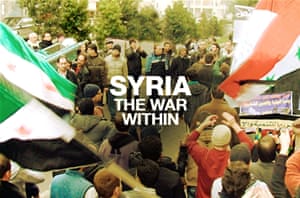
A veteran US senator has urged Washington to launch airstrikes against Syria's military in response to its use of heavy artillery to bombard and devastate residential areas in protest hubs across the country. Speaking in the Senate on Monday, John McCain said US President Barack Obama had been too soft on Damascus and cited moral and strategic obligations to help force the government of Bashar al-Assad, the Syrian president, out of power. The Republican, who stood against Obama for the presidency in 2008, said that helping arm the Free Syrian Army and other opposition groups would not be enough to "stop the slaughter of innocent civilians" and pave the way for democratic transition.
"The only realistic way to do so is with foreign air power." McCain said the US should use its "full weight of air power" to crush Syria's year-long crackdown on dissent that has claimed thousands of civilian lives. "The United States should lead an international effort to protect key population centres in Syria, especially in the north, through airstrikes on Assad's forces," he added. "The benefit for the United States of helping to lead this effort directly, is that it would allow us to better empower those Syrian groups that share our interests. Those groups that reject al-Qaeda and the Iranian regime, and commit to the goal of an inclusive, democratic transition, as called for by the Syrian National Council." McCain has long been more hawkish than both the Obama administration and his fellow legislators in his advocacy of the use of US military power to back uprisings against repressive governments. Last year, he called for the US and NATO to step up its air campaign in Libya and support for rebels fighting against Muammar Gaddafi, describing forces battling to topple the country's longtime leader as "heroes". Refugees flee to Lebanon McCain's appeal came after the UN refugee agency said that about 2,000 Syrian refugees had crossed into neighbouring Lebanon over the last two days to flee the government's crackdown on opposition strongholds. In the hillside town of Arsal in Lebanon's Bekaa Valley, residents said between 100 and 150 families had arrived from Syria on Sunday in one of the biggest refugee influxes so far from Syria into the country. A dozen families spent Sunday night in a three-storey apartment block in Arsal after fleeing what they said was a sustained army attack on the Syrian town of Qusair with tanks, rocket-propelled grenades and helicopters.
Hassana Abu Firas, another refugee from Qusair, said: "What are we supposed to do? People are sitting in their homes and they are hitting us with tanks. Those who can flee, do. Those who can't will die sitting down."
and.... http://www.debka.com/article/21797/ Netanyahu to Obama: We can’t wait much longer, Iran has not one but ten Fordows DEBKAfile Special Report March 6, 2012, 8:28 AM (GMT+02:00)  A grim Binyamin Netanyahu on Iranian threat. Israel Prime Minister Binyamin Netanyahu brought 14,000 pro-Israel lobby cheering delegates to their feet repeatedly - especially when he pledged Monday night, March 5, “Never again will our people have to live in the shadow of annihilation.” Earlier, he and US President Barack Obama took a break from rhetoric and used a brief private interlude during their three-hour long meeting attended by advisers to get down to brass tacks in their argument over how and when to arrest Iran’s race for a nuclear weapon. DEBKAfile’s Washington sources disclose a couple of their comments. While publicly reiterating that there is still a window that allows for a diplomatic resolution of the issue, Obama admitted privately to Netanyahu that the Fordow underground uranium enrichment plant can no longer be destroyed by bombs and missiles; American commanders say all that can be done is to block the vents of this underground facility and slowly stifle the personnel inside. Time and several strikes would be needed to accomplish this. Netanyahu: Iran is building not one Fordow but ten. We can’t wait much longer. In other words, the talk of open windows and more time is moot. Obama: There is no intelligence that Iran has made a final decision to pursue a nuclear weapon. Netanyahu: Time is growing short. DEBKAfile’s Washington source denied media reports that the prime minister had assured the president that Israel has not yet decided to attack Iran’s nuclear sites, meaning he had offered the president the time he wanted for diplomacy and sanctions to work. Our sources report, to the contrary, that he insisted Israel is operating on a shorter timeline than the United States. Then, in his speech to AIPAC, he set the record straight by declaring Israel can’t afford to wait much longer” and lauded the president for affirming Israel was entitled to “defend itself, by itself.”How much is “much longer” is the subject of debate, but one thing is clear: Israel won’t wait beyond 2012 or until after the US presidential election in November. “Israel has waited six years for sanctions to stop Iran,” he told the AIPAC audience, but they have failed. He produced two documents dated 1944 in reply to the widely-reported view that Israel is short of the capacity to destroy Iran’s nuclear facilities and an attack would cause disastrous consequences for the region and the world. One document was a World Jewish Congress plea to the US State Department for the Americans to bomb the Auschwitz death camp. The second was a rejection of the WJC’s appeal, explaining that diverting large-scale air power from America’s primary front would bring forth “even more vindictive action from the Germans.” Netanyahu drew loud cheers when he declared, “As Israeli Prime Minister I will never let my people live in the shadow of annihilation! Never again!” Prime Minister Netanyahu’s visit to Washington did not resolve Israel’s differences with the Obama administration on if, when and by whom military force should be applied to shutting down a nuclear Iran. Therefore, no joint communiqué or statement followed their White House meeting, which was also attended by White House National Security Adviser Tom Donilon and the prime minister’s security adviser Yaakov Amidror. But he made a powerful address to American Jews to rally them behind his conviction that a nuclear weapon in Iran’s hands imperils not just Israel’s survival but, if it is not preempted, would allow Tehran to use it in one form or another to as a weapon of terror against every nation in the world. An Israeli attack on Iran is therefore to be expected at some time in the coming months. Before winding up his five days in the US and Canada, Netanyahu is meeting House Speaker John Boehner and other Congressional leaders in a bid for support for his strategy for a nuclear Iran. and... McCain: Bomb Syria; But Iraq and Russia oppose InterventionPosted on 03/06/2012 by Juan Senator John McCain called on Monday for US air strikes on Syria, but the Obama administration pushed back. McCain said on the Senate floor, “Foreign capitals across the world are looking to the United States to lead, especially now that the situation in Syria has become an armed conflict . . . But what they see is an administration still hedging its bets — on the one hand, insisting that Assad’s fall is inevitable, but on the other, unwilling even to threaten more assertive actions that could make it so.” An unnamed senior Obama administration told Jake Tapper of ABC News that while he sympathized with Senator McCain’s frustration over the massacres in Syria, the White House did not view McCain’s suggestion as practical. He pointed out that Syria is not like Libya:
The official noted that the Syrian army is deploying snipers on rooftops against demonstrators, who could not be dealt with by a foreign air force from the air, and that Syria’s armor and artillery is inside densely populated cities where it can’t be bombed without killing large numbers of civilians. This Obama administration position is the only practical one. What in the world could you bomb in Syria from 30,000 feet that would help the revolutionaries succeed? I can’t understand how McCain’s proposal could work, tactically. Unlike the Obama administration, I am also concerned with international law, and there are no legal grounds for the US to bomb Syria! Since Syria hasn’t attacked the US, that action would require a United Nations Security Council resolution. The horrific pictures of the Syrian army’s weeks-long siege and ultimate reduction of rebel-held Baba Amr in Homs devastated us all. But the real lesson of that horrid episode was that the revolutionaries in Syria erred in attempting to hold urban territory. The defectors from the military in the Free Syrian Army don’t appear to have taken any armor with them when they departed the Baath barracks. They are therefore small guerrilla bands with light weaponry. It was a big mistake for them to hunker down in a particular city quarter and to stand and fight there against tanks and artillery. The only advantage guerrilla bands have is in hit and run tactics, and that requires a hideout not known or accessible to the government, from which raids can be made before the guerrillas fade away again. Those needs, which underpin any guerrilla war, may not be capable of being met in Syria. In which case guerrilla military activity may not be very useful in Syria. In my view, the most successful movements so far have been the persistent, peaceful demonstrations by civilian forces, and I think the revolution has more chance of success in Syria if it stays peace-oriented. Only a peaceful movement could allay the fears of the Christians, Allawis and moderate Sunnis, about what kind of regime would come to power after the fall of the Baath. Syria is more likely to be liberated by a peace movement than by a rump defectors’ army. Meanwhile, Iraqi Prime Minister Nouri al-Maliki gave an interview in which he said, “I do not believe Syria is in the throes of an end to the crisis.” He added that some say it will all be over with in a month or two months. He disagreed: “Take a year or two.” He said, “I expect the crisis to last a long time. The regime exists. It will go on existing.” He also defended Iraq’s vote at the Arab League against the Saudi and Qatar proposal that the Syrian opposition be given weapons. He said that most AL states voted against the Saudi/Qatar proposal. He could not understand why critics of Iraq called it “isolated” in that vote, since Iraq was actually in the majority. Al-Maliki sharply criticized Turkey, accusing the ruling Justice and Development Party of posing as a defender of Sunni Muslims in the region. He said that Sunni Arabs don’t need Turkey to defend them, just as Arab Shiites don’t need Iran to defend them. The Arab League has managed to agree that Bashar al-Assad should step down as president in the wake of the massacre at Homs. But the Saudi-Qatari plan of sending weapons to the revolutionaries was rejected by the rest of the League. The Arab League hasn’t been able to convince the BRICS nations even to support the call for Bashar to resign. India refuses to call for Bashar’s resignation, saying that the Syrian people should make their own decision about who should be president. Likewise, Russia’s Vladimir Putin continues his support for the Baath government in Damascus. Much less a military intervention, the international community can’t even agree to insist that Bashar step down. |




No comments:
Post a Comment